
Treating Your Pom Like a Fragile Object (And Why It Backfires)
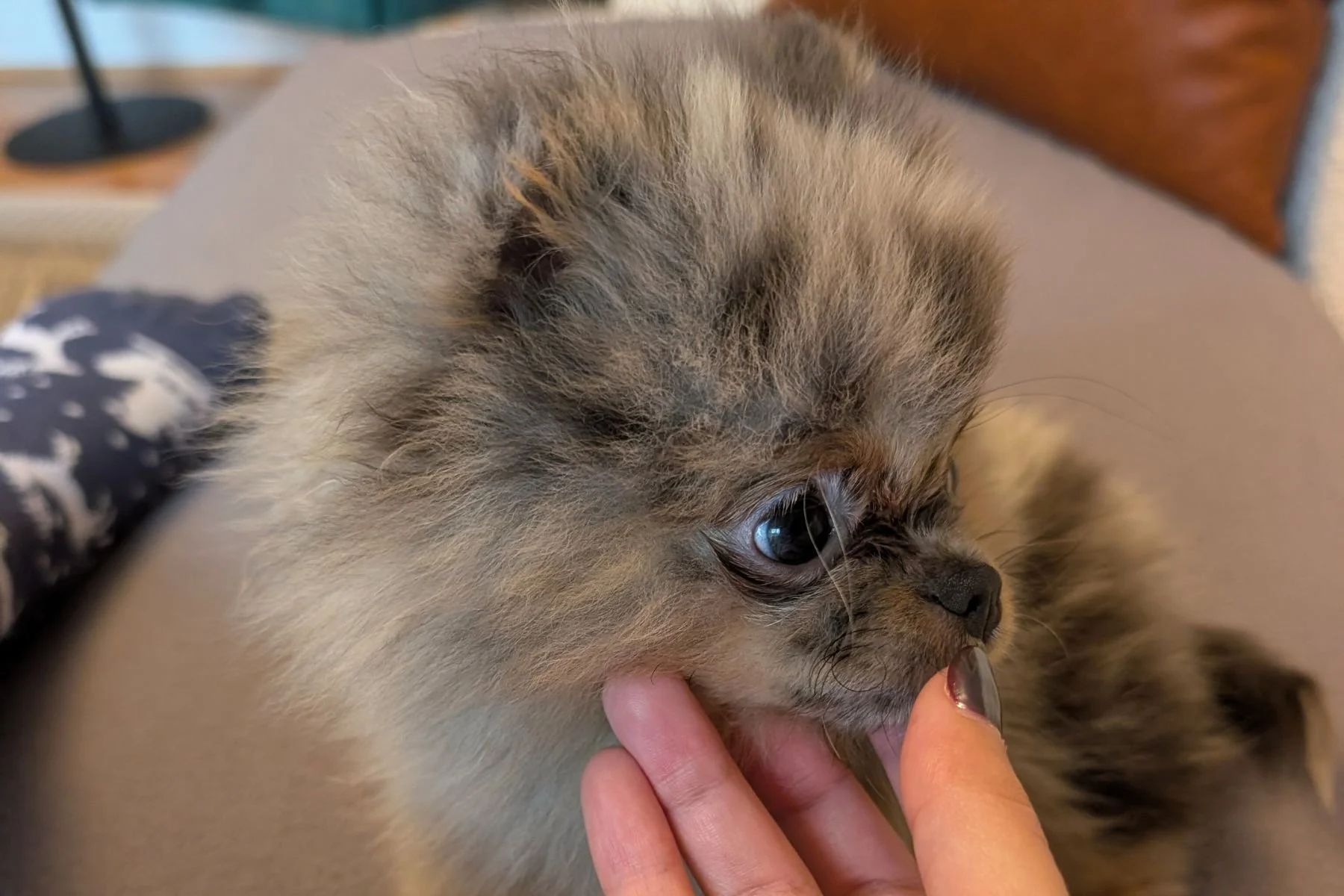
Because Pomeranians are small, it’s natural to be careful. Early on, that could look like carrying them frequently, limiting where they walk, or hesitating to handle them too much.
Most of us start this way. It comes from wanting to protect them.
Over time, though, that carefulness can quietly turn into uncertainty and undermine a Pom’s confidence. Below are some simple ways to treat Poms in a safe and secure way while building their confidence back up.
Why handling is important
The term “handling” refers to any kind of active touching of a dog, including lifting, repositioning, restraining, inspecting, or moving them. In other words, anything beyond casual petting.
Handling sits underneath almost every other kind of care. Brushing, nail trims, vet visits, even being moved out of the way all rely on a dog feeling neutral about being touched and repositioned.
When handling has been rare or inconsistent, those moments tend to feel bigger than they need to be. Dogs can react out of fear, aggression, or uncertainty.
How to build confidence in your Pom
Dogs tolerate care more easily when handling feels familiar and low-pressure. When they know what's coming, they don't have to brace for it.
That doesn’t mean handling more often, but it does mean handling in a way that feels predictable.
A simple way to start
One simple place to start is creating a consistent way you pick up and set down your Pom.
For us, that looks like crouching down first, saying 'up,' then lifting from the chest so his back legs can rest in the crook of an arm. When we put him down, his feet touch the floor before we let go. It's not complicated, just consistent enough that he knows what's coming.
For Beignet, this played the biggest role when it came time for walks. He would get overstimulated as soon as he saw us pick up the leash, running in circles and jumping up and down. This made it impossible to clip the leash on him without chasing him around the house, trying to corral him like a cow, and grabbing him as quickly as we could.
We decided to create predictability in how we attach and detach the leash from his harness. We designated a chair by the back door “the Beignet chair.” With leash in hand, we’d tell him to go on the chair and sit. He’d have to sit quietly while we attached the leash.
When we returned from the walk, we again told him to return to his chair. He’d then wait for us to detach the leash before jumping off to find some water.
This small handling change helped calm him down before and after walks. Don’t get us wrong, he still runs around when he hears the word “walk”, but he knows that patiently sitting means we’ll calmly attach the leash and he’ll get to go on his walk.
The overall takeaway
Predictable handling builds confidence. That confidence is what makes everything else, like brushing, vet visits, and grooming appointments, easier over time.
