
If you’re reading this at midnight because your Pomeranian puppy looked fluffy and perfect three weeks ago and now looks like a half-deflated cotton ball with patchy fur and concerning bald spots, you’re in the right place.
We’ve been through this twice. Beignet went through puppy uglies and emerged on the other side with the full wolf sable coat he has now. Boqui, our blue merle, went through the same transformation: the same alarming patchiness, the same uneven texture, the same moment of wondering if something was wrong.
Puppy uglies is one stage of five that a Pomeranian coat passes through, and it’s the one that sends people looking for answers at midnight. If you want the whole arc, from the puppy coat to the senior coat change, our Pomeranian coat stages guide maps all five with photos.
Here’s what’s actually happening.
Why Your Pomeranian Looks “Ugly” Right Now (It’s the Coat, Not the Dog)
If you searched some version of “ugly Pomeranian” to get here, first: your dog is fine, and so is your taste in dogs. What reads as “ugly” is a specific, predictable combination: the fluffy outline collapses because the puppy coat has thinned, the new adult coat hasn’t built volume yet, and the colors can shift mid-transition so even the face looks unfamiliar. Ears suddenly look too big. Legs look too long. The tail goes stringy. Every one of those is the silhouette of a coat in transit, not the dog underneath.
It’s also a good sign. A patchy, awkward 7-month-old is a coat doing exactly what it’s supposed to do, on schedule. The dogs that skip an awkward phase entirely are rarer than the internet suggests; most owners just don’t post the middle months.
A note on vocabulary, because everyone lands here from a different search. Breeders call it the puppy uglies. Owners call it the ugly stage, the ugly phase, or just “why is my Pomeranian ugly.” It’s all the same event, and it has an ending.
What the Pomeranian “Ugly Stage” Actually Is
A Pomeranian puppy is born with a single-layer puppy coat. Soft, relatively short, and uniform. This is not the coat they’ll have as adults. Somewhere between 4 and 6 months, the body begins replacing that puppy coat with the adult double coat: a dense undercoat that insulates and regulates temperature, plus longer guard hairs on top that repel moisture and protect the skin.
The problem is that these two processes, losing the puppy coat and growing the adult coat, don’t happen in a tidy handoff. The puppy coat falls out in sections, often unevenly. The adult coat grows in at a different rate in different areas. The result is a puppy that can look genuinely alarming: patchy, scraggly, thinner in some areas than others, with texture that seems wrong compared to what they looked like two months ago.
The two layers also arrive out of order. The undercoat tends to develop before the guard hairs catch up, which is why the coat can look thin and flat even while new growth is happening underneath. The volume that gives a Pom their signature look comes from the guard hairs, and those take longer. The coat may feel different in texture during this phase too: less soft than the puppy coat, more coarse or cottony in places. That resolves as the adult coat matures.
All of which is why this is a critical time to be careful about grooming. The new adult coat is fragile while it’s growing in, and the wrong approach (particularly anything that involves cutting or shaving) can interfere with the coat cycle. More on that in the shaving article, but the short version is: do not let anyone, except a vet, shave your Pomeranian’s coat during puppy uglies if you want the adult coat to develop properly.
The Pomeranian Ugly Stage Month by Month (With Photos)
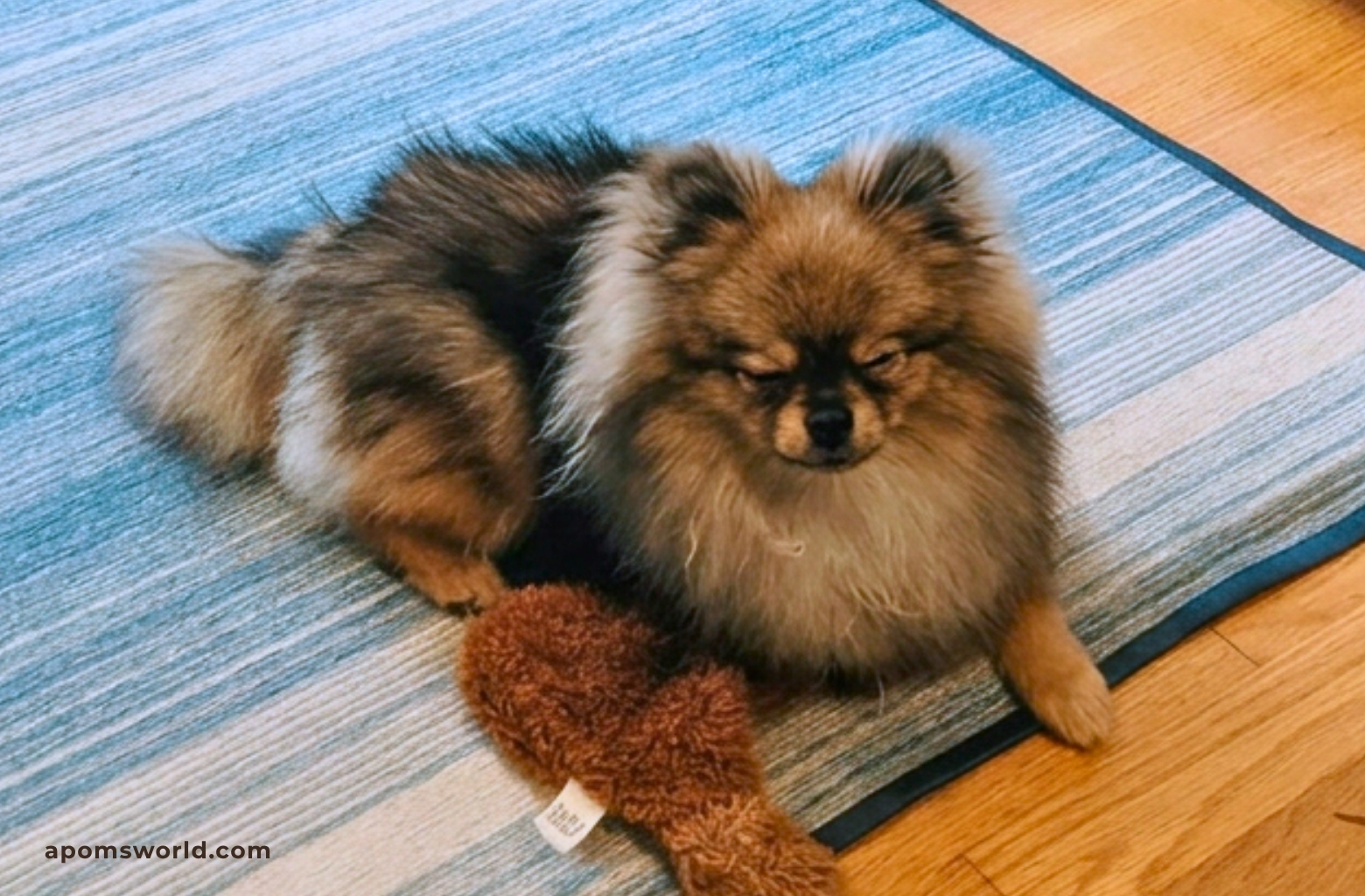
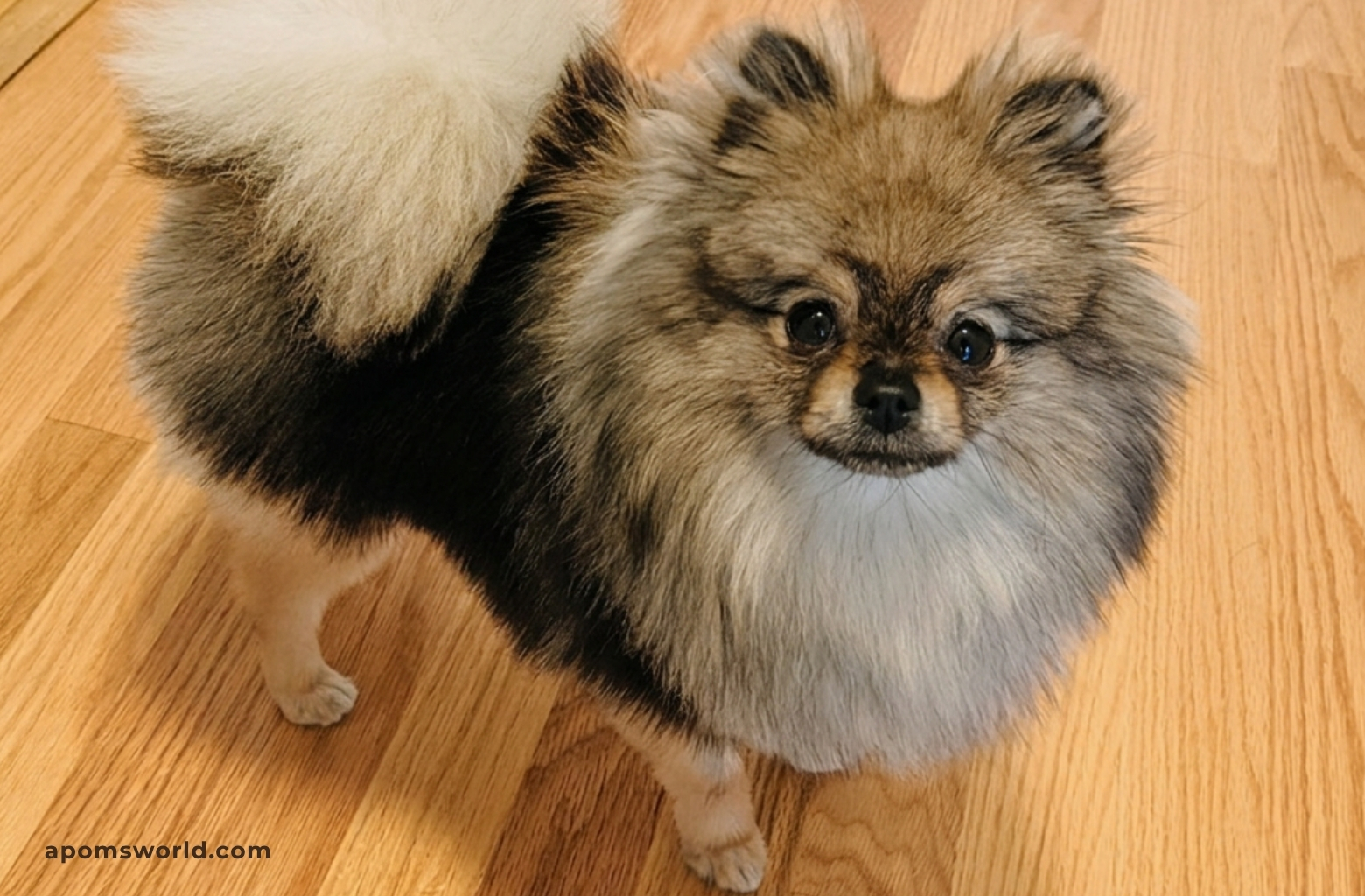
The photos below are Beignet’s: before and after, and every awkward month in between. His is the transition we documented end to end.
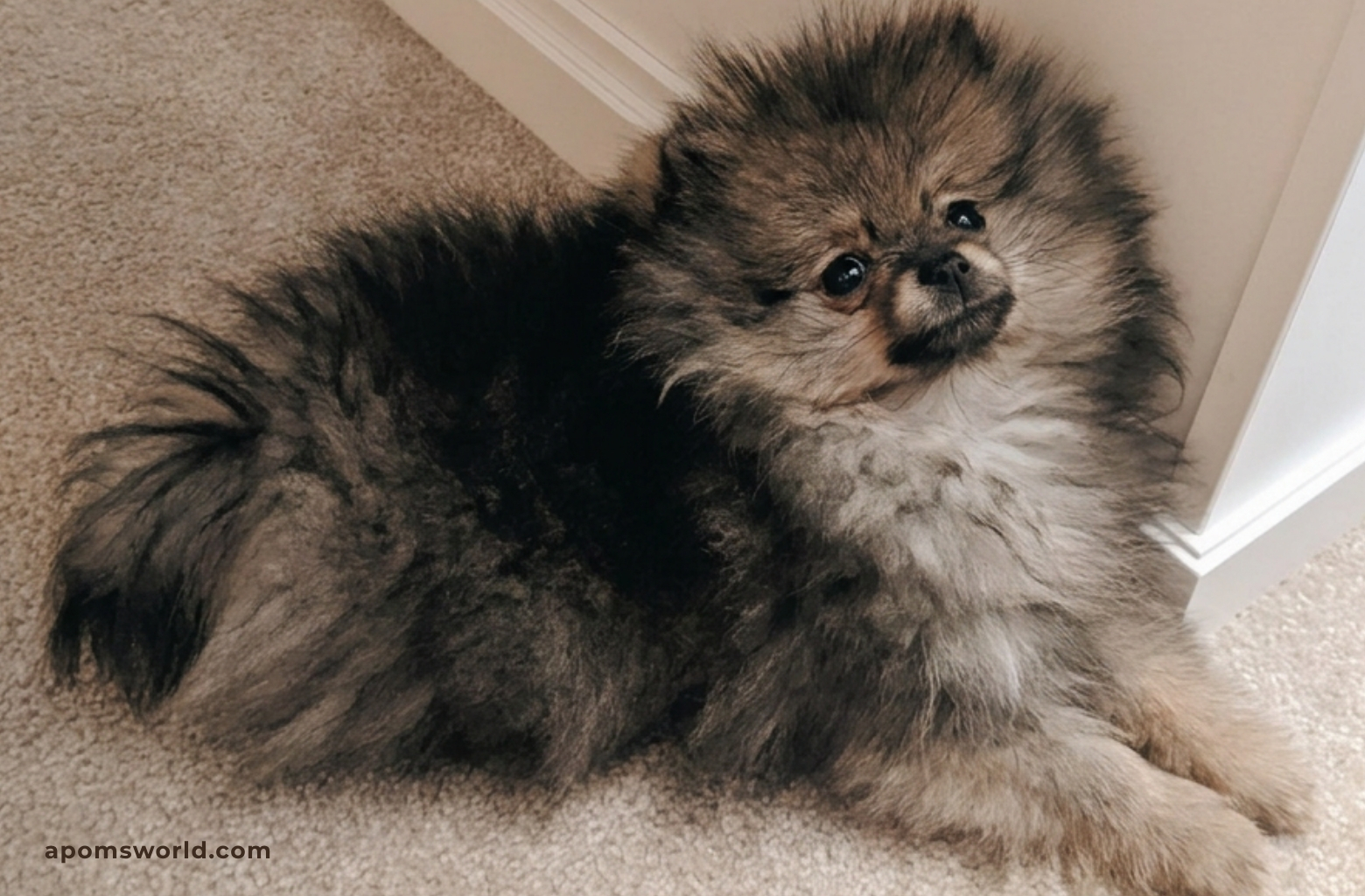
The timing varies but follows a general pattern:
4–6 months: the ugly stage begins
The puppy coat begins thinning. You may notice less volume overall, or patches that look different from the surrounding fur. The face often changes first. The muzzle area can look sparse while the rest of the coat still looks puppy-fluffy.
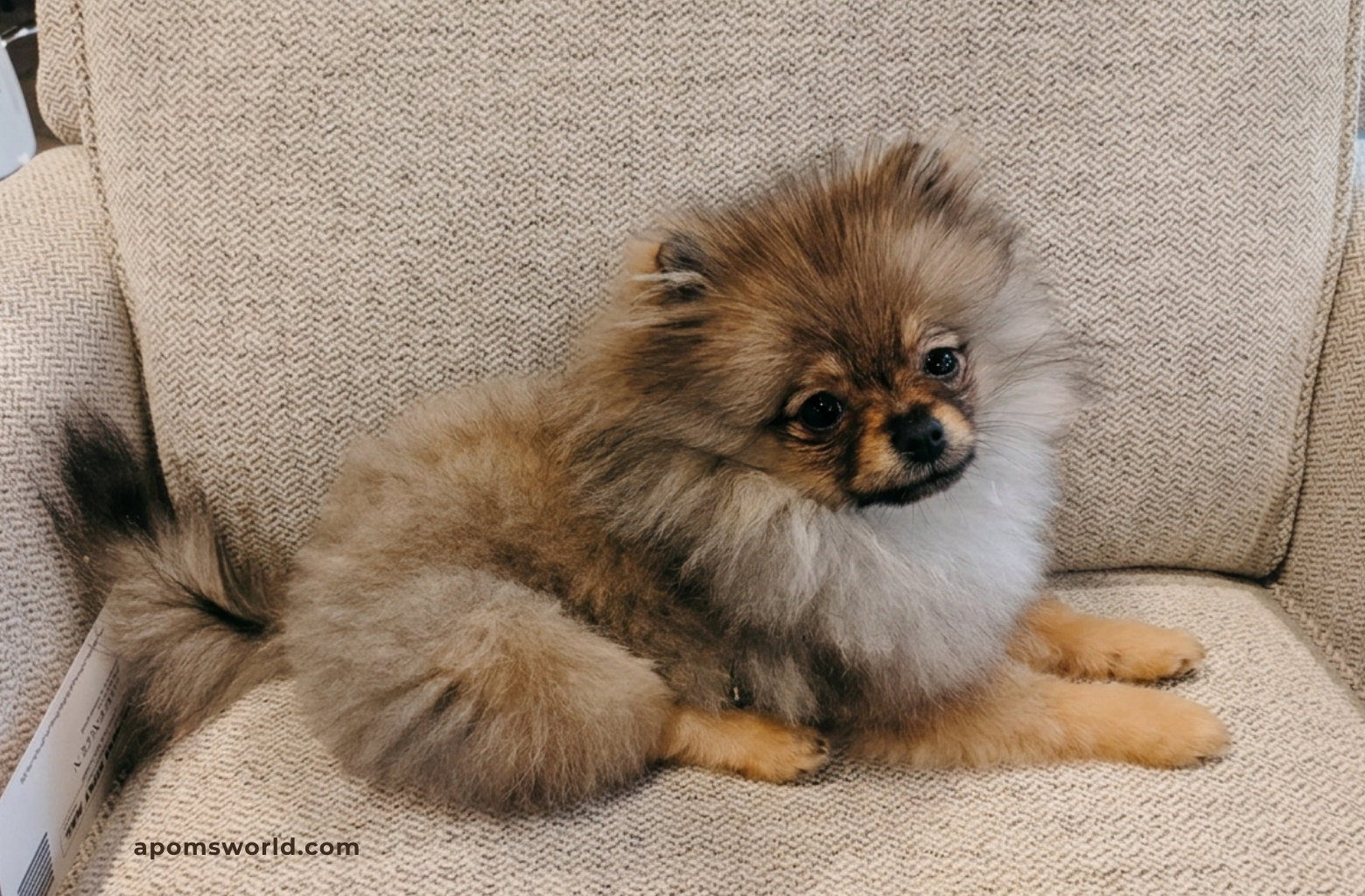
6–9 months: the worst of the ugly phase
This is typically the most dramatic period. The coat may look significantly thinner, uneven, or almost moth-eaten in places. Some puppies look noticeably scruffy. The tail often loses its fluff during this phase. This is when most owners start panicking, and when most of the “ugly Pomeranian” photos on the internet get taken.
It’s also when a groomer is most likely to suggest tidying things up. Don’t let them — here’s what shaving actually does to a double coat.
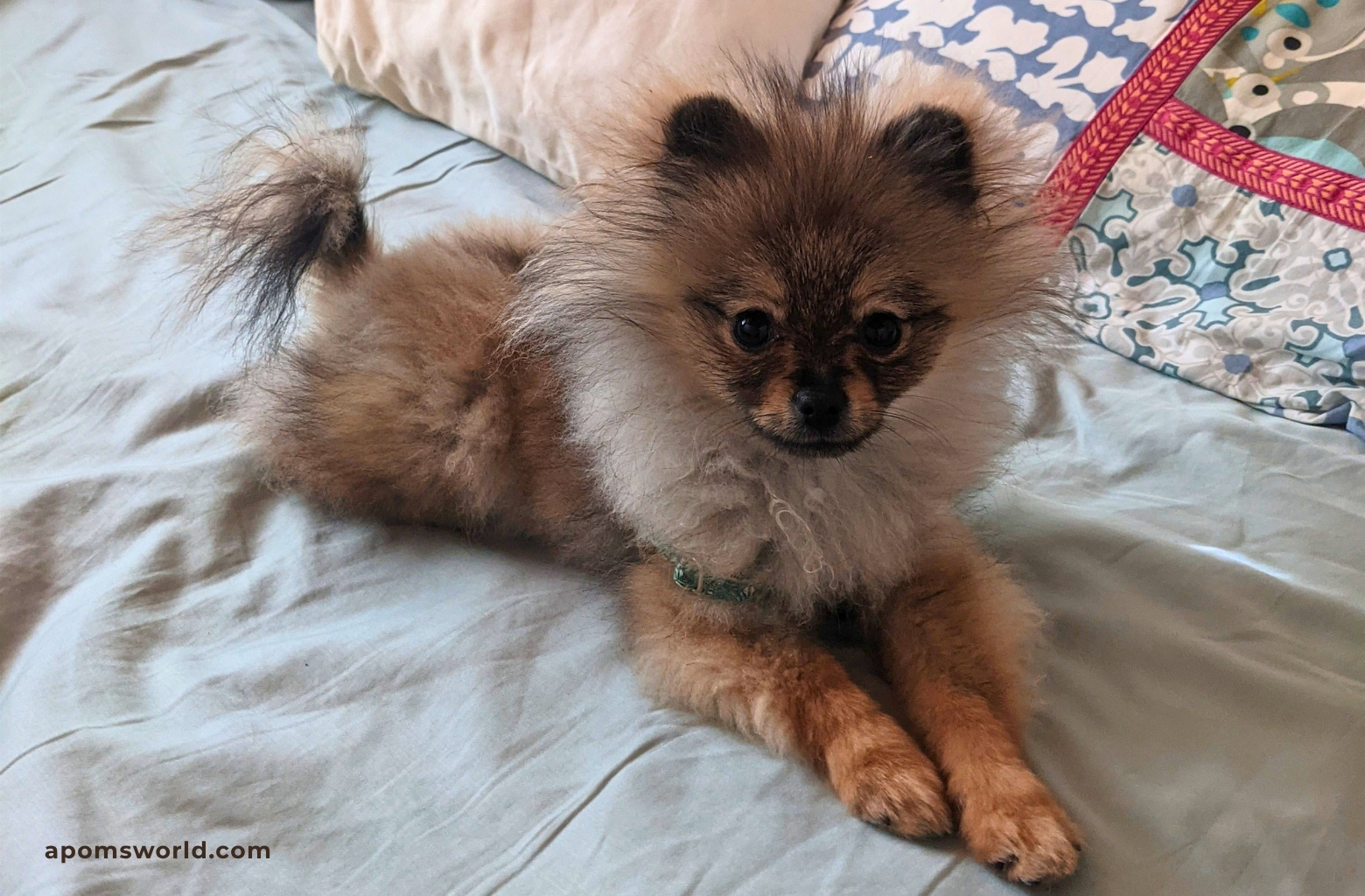
9–12 months: new growth fills in
The adult coat begins coming in more visibly. You’ll start to see new growth filling in the sparse areas. The texture will start to feel different, coarser than the puppy coat, which is normal.
12–18 months: the adult coat arrives
Full adult coat. The guard hairs have length, the undercoat is dense, and the volume that made you fall in love with the breed in the first place is back. Fuller and more dramatic than the puppy coat ever was.
Some Poms sail through puppy uglies relatively quickly and without looking too dramatic. Others, particularly those with very plush puppy coats, can look quite rough for several months. There’s no way to predict which category your puppy will fall into, and the severity of the ugly phase has no relationship to the quality of the adult coat on the other side.
Note: I have noticed that Pom puppies with silkier coats tend to have an easier time with the coat transition than those with more cotton-like coats.
The color change nobody expects
Beignet is a wolf sable, and his color transformation was as dramatic as the texture one. Sable Pomeranians have guard hairs that are a different color at the tip than at the base, so when the puppy coat falls out it can feel like your Pom has changed colors entirely. He went from almost entirely black as a puppy to significantly lighter across most of his body. His face came back tan, his chest cream, and his body settled into black-tipped fur with tan and cream underneath. He looks like a completely different dog.
Merles change on their own schedule. Boqui is a blue merle, and his transition showed up first on the silver sections of his coat while the blue held on, with the new adult fur arriving as a coarse stripe along his spine before spreading outward. The blue caught up eventually. If only one color of your merle’s coat seems to be turning over, that’s normal.
What to Do During the Ugly Stage
The answer is mostly: not much different from normal, and definitely not panic.
Keep brushing gently. The coat still needs maintenance during the transition even though it doesn’t look like much. Loose puppy coat needs to come out, and the new growth benefits from regular gentle brushing to keep it from tangling as it develops. We use the Chris Christensen Big G Slicker Brush with a very light hand during this phase. The pins reach the skin without the pressure needed for a full adult coat. A light conditioning spray before brushing helps reduce static and makes the process gentler on fragile new growth.
The full brushing guidance for puppies specifically, including technique, frequency, and what to avoid, is in the puppy brushing article.
Don’t overbathe. Bathing too frequently during this phase can dry out the skin and interfere with the natural coat oils that support new growth. The normal bathing schedule applies here: every four to six weeks unless there’s a specific reason to bathe more often.
Don’t cut or shave. This bears repeating because well-meaning groomers sometimes suggest a trim to “even things out” during puppy uglies. The coat is not uneven because it needs cutting; it’s uneven because it’s growing. Cutting during this phase can disrupt the coat cycle and result in an adult coat that never develops properly. This is not a recoverable mistake in some cases. Once the adult coat has finished coming in, tidying the outline is a fair conversation to have with a groomer, and which Pomeranian haircut styles are safe for the coat is worth reading before you book that first trim.
Do document it. Take photos during the ugly phase. When the adult coat comes in and your Pom looks completely transformed, you’ll want to remember what the in-between looked like. It’s also useful for your vet to have a baseline record if you ever have questions about coat health later. (The photos in this article exist because we followed our own advice here, badly lit kitchen shots and all.)
Don’t rearrange a spay or neuter around it. Both of our boys were neutered at 9 months, squarely mid-transition, and the adult coat still came in full and on schedule. Hormones do influence coat, and some double-coated dogs grow a softer, denser “post-neuter coat” afterward, but that isn’t a reason to delay the surgery. The brushing routine doesn’t change either way.
When to Worry Whether Puppy Uglies Are Something More
Puppy uglies is a coat transition, not a health problem. But there are signs that what you’re seeing might be something other than normal puppy uglies, and it’s worth knowing the difference.
See a vet if the coat loss is accompanied by itching, redness, or irritated skin. This can indicate allergies, mange, or a skin condition that needs treatment. Also see a vet if the loss is happening in very defined, symmetric patches on the trunk while the head and legs remain fully coated. This pattern can be an early sign of Alopecia X, a hereditary condition that affects Pomeranians specifically. Normal puppy uglies is uneven and patchy throughout the coat, not symmetrically distributed on the body. If you have a merle, note their coat colors can transition at different rates, so don’t be alarmed if only one color of fur is coming in.
If your puppy is otherwise healthy, eating well, active, no skin irritation, and the coat changes started around 4 to 6 months, it’s almost certainly puppy uglies. But if you’re genuinely unsure, a vet visit for reassurance is always reasonable.
The Part Nobody Warns You About
The coat that comes in after puppy uglies is not the same as the puppy coat. It’s denser, coarser, and requires more maintenance. The brushing routine that worked for your soft puppy coat will need to evolve as the adult double coat develops since what worked before won’t reach the undercoat where mats actually form.
Once that adult double coat arrives, you will also experience your first true seasonal ‘coat blow’ (when they drop undercoat all at once). To prepare your grooming kit and your home for this, read through our Pomeranian Blowing Coat Survival Kit to see exactly what we rely on. And for what adult shedding actually looks like day to day, including how much is normal, the shedding guide is the companion piece to this one.
Puppyhood is also a good time to start building the grooming habits that will serve you for the next decade. The adult Pomeranian coat is manageable with a consistent routine, but it does require one. Starting that routine while the coat is still coming in means it’s established by the time the full adult coat arrives and actually needs it.
The grooming system we use (brush, comb, spray, in the right order) is covered in the best brush article and the brushing frequency article. The short version: a long-pin slicker brush, a metal comb to check behind it, and gentle consistency. That’s what gets a Pom through puppy uglies and keeps the adult coat healthy on the other side.

