At some point between the fluffy puppy you brought home and the full coat you were promised, almost every Pomeranian looks wrong. The fluff thins, the color shifts, the tail deflates, and you find yourself searching your dog’s age plus the word “coat” at midnight.
Nearly all of it is on schedule. A Pomeranian’s coat moves through five distinct stages across its life, each with its own look and its own timeline, and most of the panic comes from meeting a stage nobody warned you about.
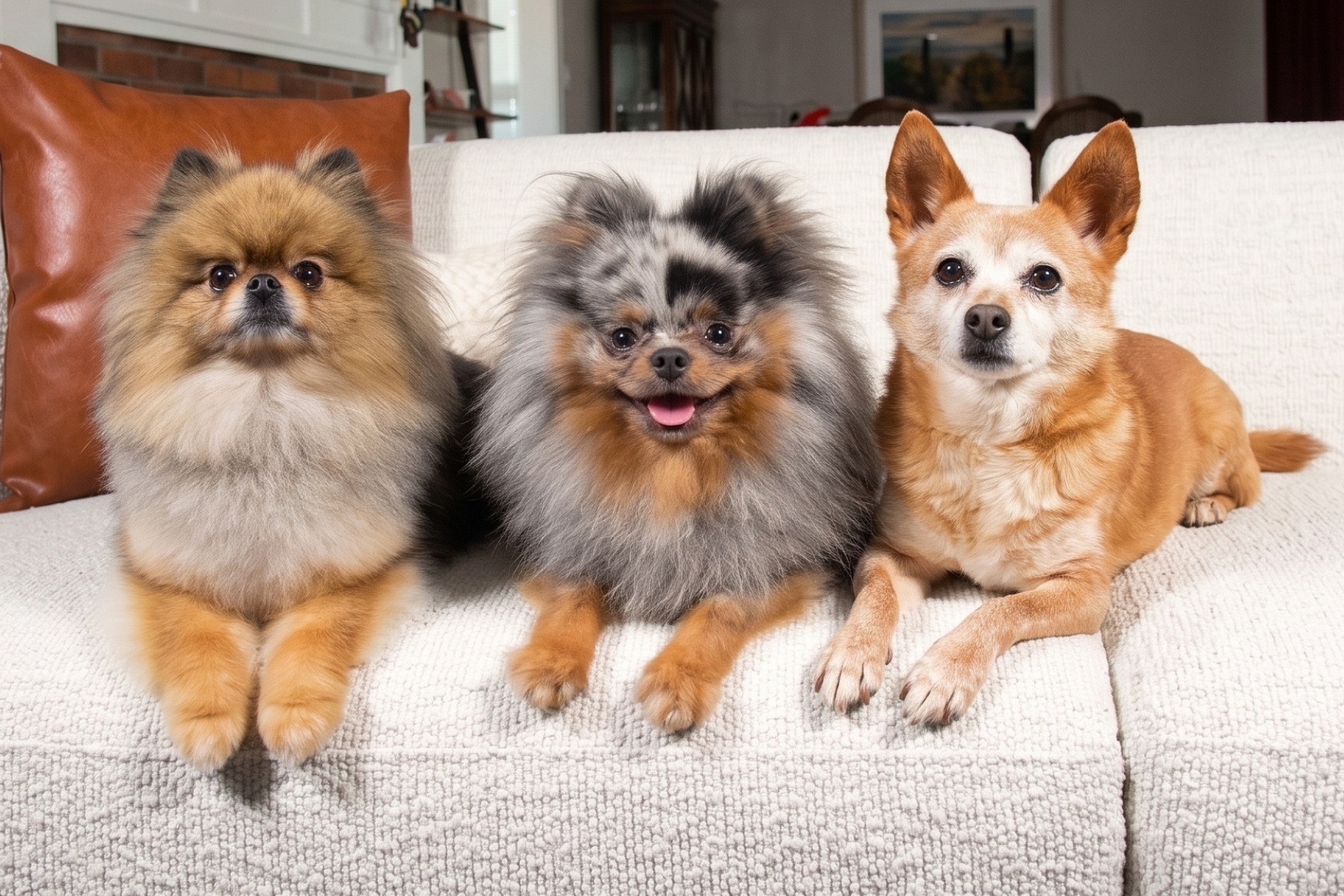
We’ve kept Pomeranians for over ten years, and the three living here now sit at three different points on that timeline. This page maps the whole arc with photos of our own dogs; where a single stage deserves a deep dive, we have a dedicated guide and point you there.
Stage 1: The Puppy Coat (Birth to About 8 Weeks)
A Pomeranian puppy wears a single soft layer, closer to down than to fur. It’s short, uniform, and deceptively easy: it doesn’t mat, it barely sheds, and it needs nothing but a soft brush and warmth. It’s also temporary equipment, built to keep a newborn warm until the real coat starts construction.
The first eight weeks of that coat happen at the breeder’s, which is why our timeline starts at gotcha day rather than birth. Boqui came home from his breeder at around eight weeks, still in full puppy fluff.
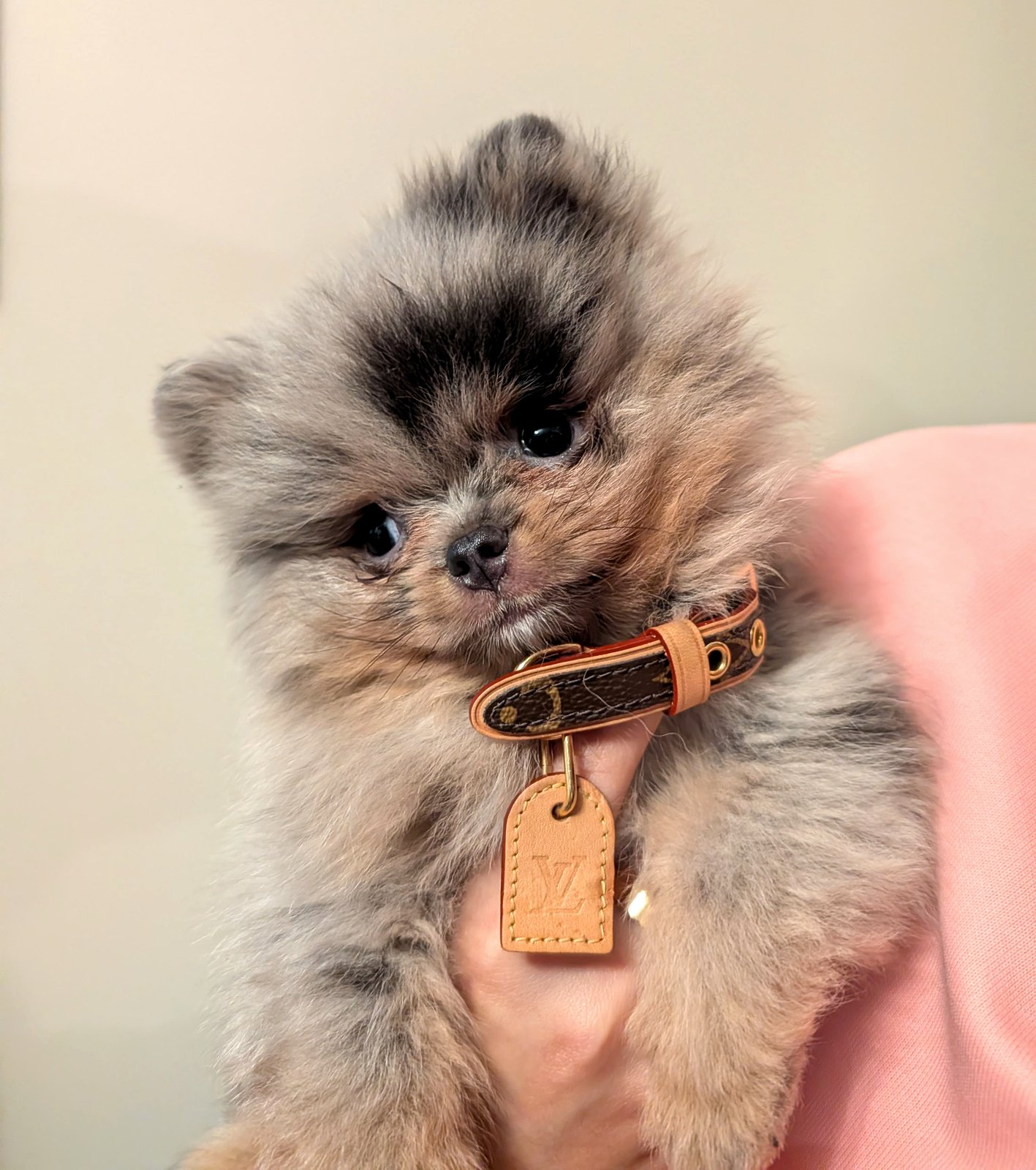
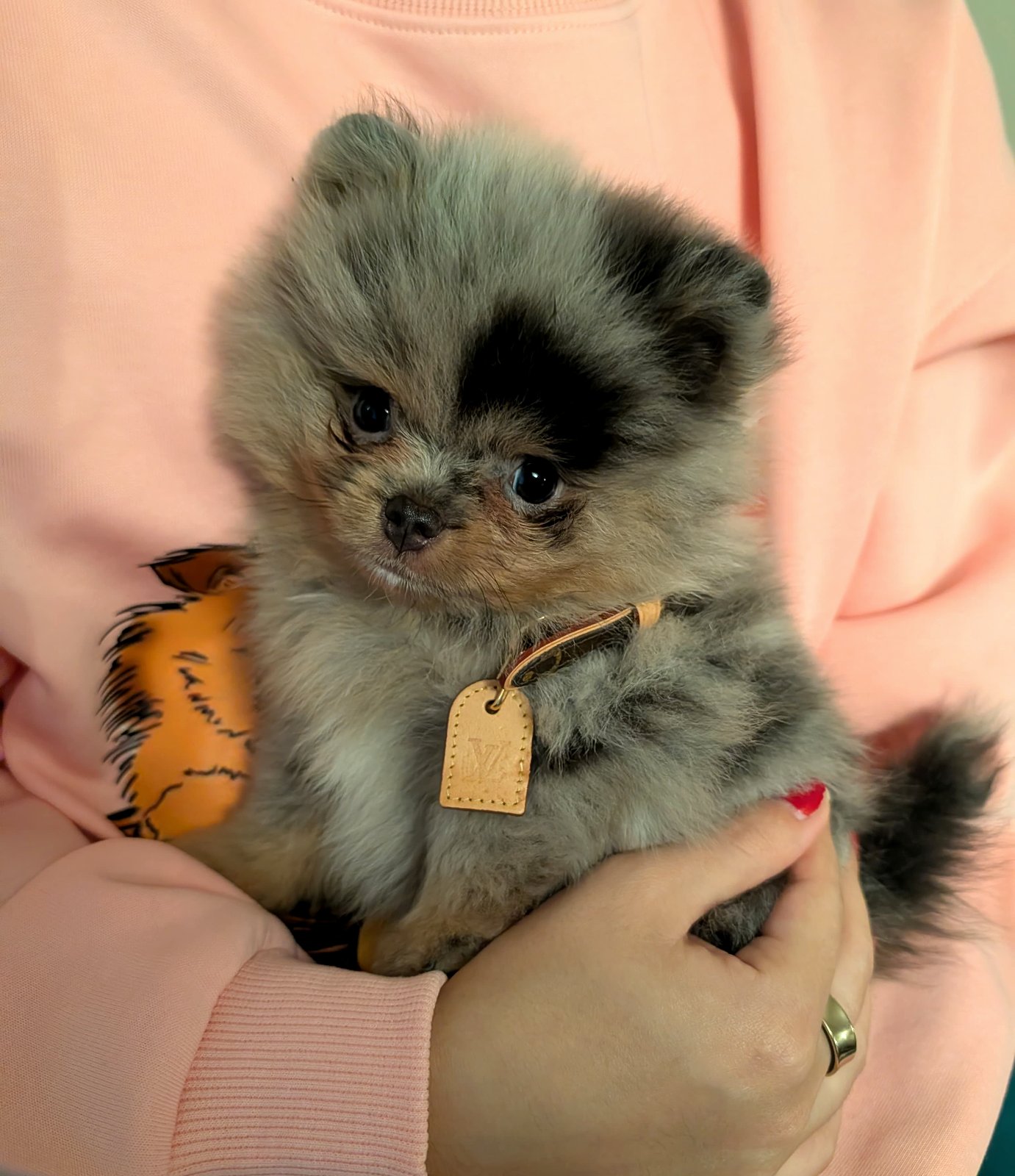
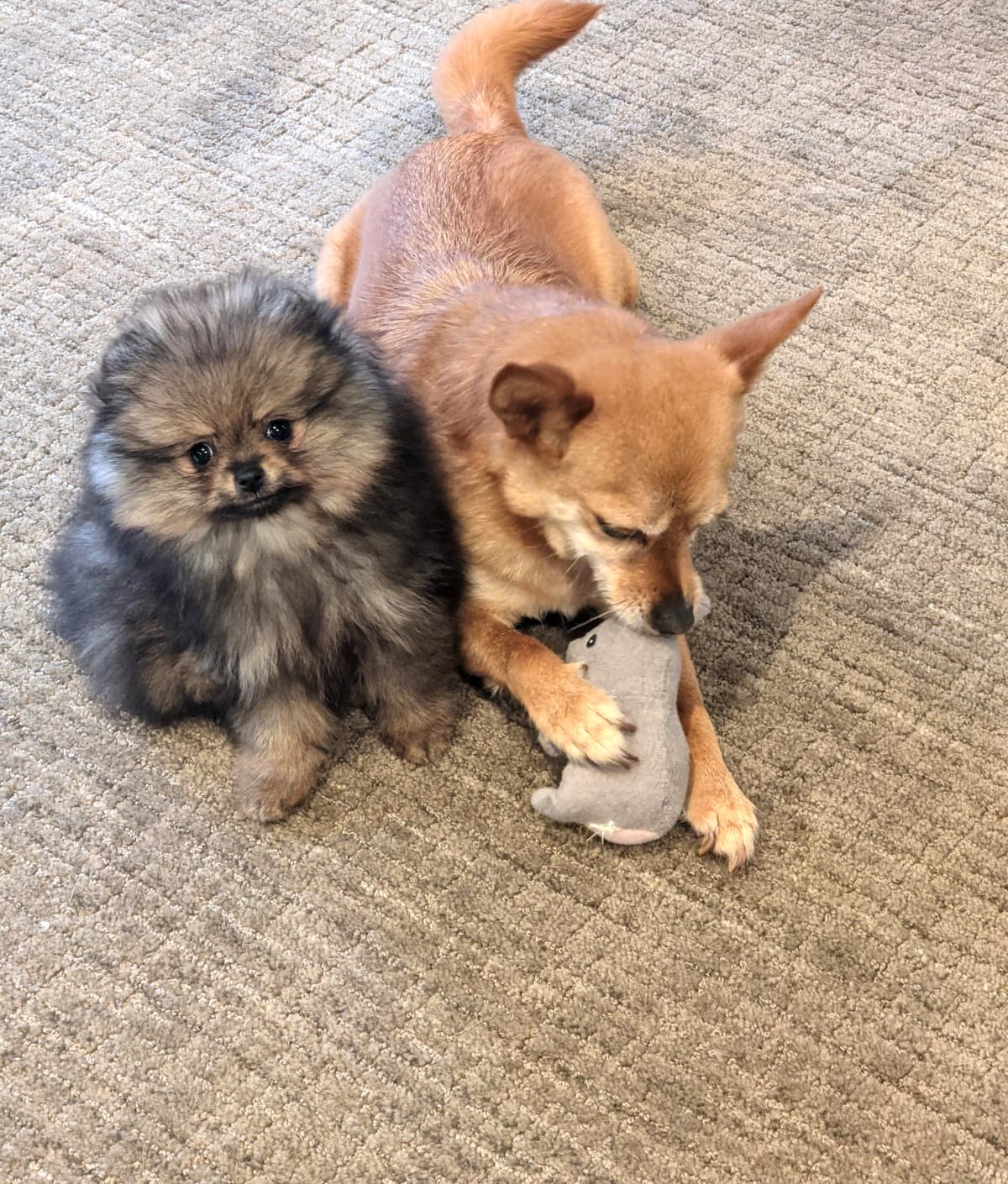
Beignet and Boqui arrived five Octobers apart, and their puppy photos could nearly be swapped: same cotton-ball texture, same blunt little face, wildly different adult coats waiting underneath. That’s the thing to enjoy about this stage. It tells you almost nothing about the coat your dog will actually wear, and it will be gone before you’ve finished the first bag of puppy food.
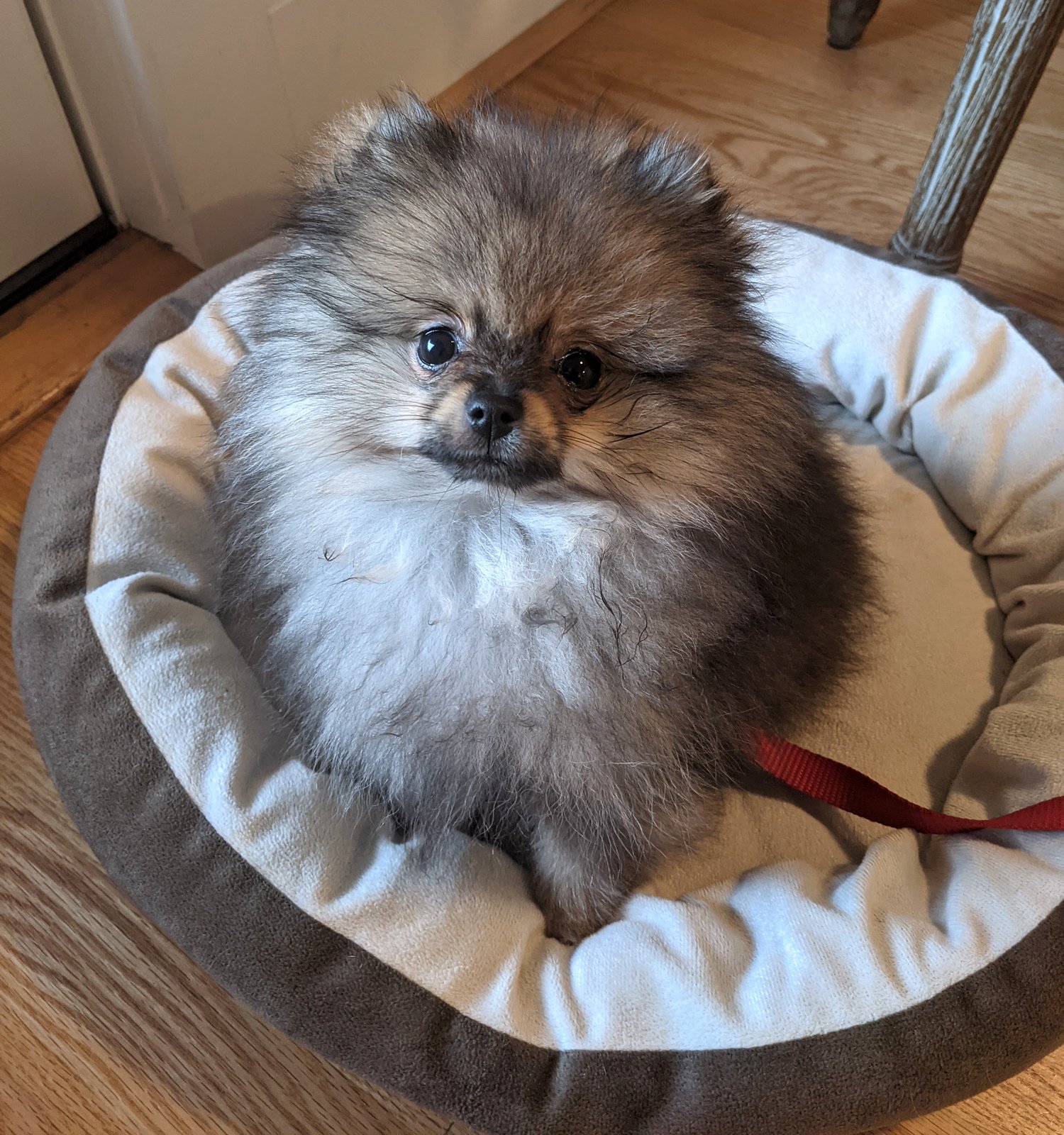
From your side, this stage is rehearsal. A few gentle minutes of brushing a day teaches a puppy to hold still for grooming long before the coat demands real work, and that tolerance is the most valuable thing you can build before the transition arrives. The coat doesn’t need the sessions yet; the dog needs the habit.
Stage 2: The Transition (4 to 14 Months)
Somewhere between 4 and 6 months, the puppy coat starts shedding out while the adult double coat grows in underneath, and it does not happen evenly. The result is the awkward, patchy, thin-coated stretch that convinces new owners something is medically wrong. The worst of it usually lands between 6 and 9 months, and the transition finishes somewhere between 12 and 14 months.
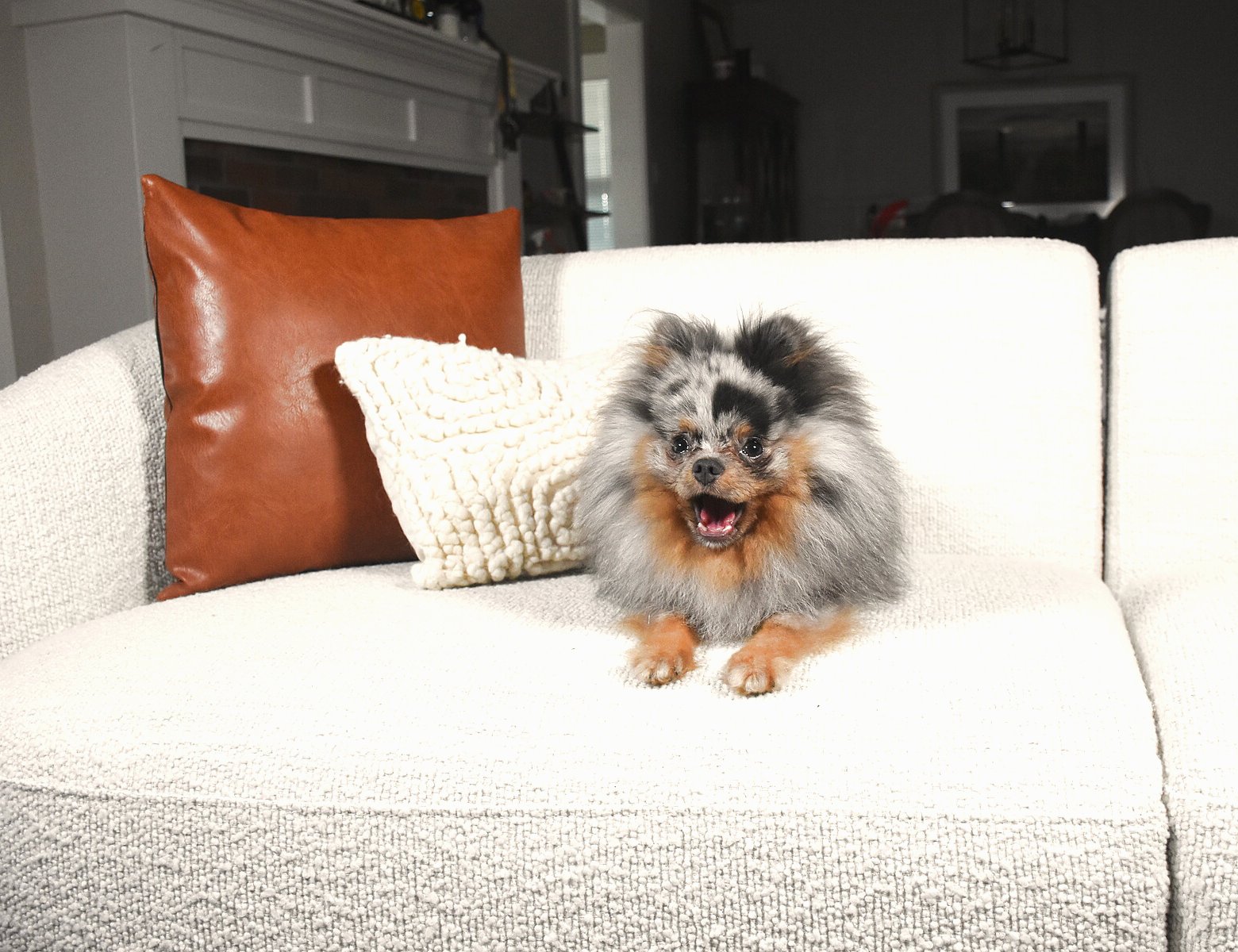
Every dog runs its own version of it: Beignet’s tail plume all but vanished during his transition, while Boqui’s tail barely changed as the rest of him molted. Boqui’s merle patches pulled a stranger trick. The hair colors themselves never changed, but the silver and blue sections grew in at different rates, so the shapes of his patches visibly shifted, the blue became more prominent, and his eye patch was the one part of him that never moved.
This is one stage of five, and it’s the one that deserves its own page. The full month-by-month, with photos of the same dog at 3, 5, 7, 9, and 12 months, is in our puppy uglies guide; if your Pom looks thin at 8 months, that page answers it directly.
Stage 3: The Full Adult Double Coat (12 to 18 Months)
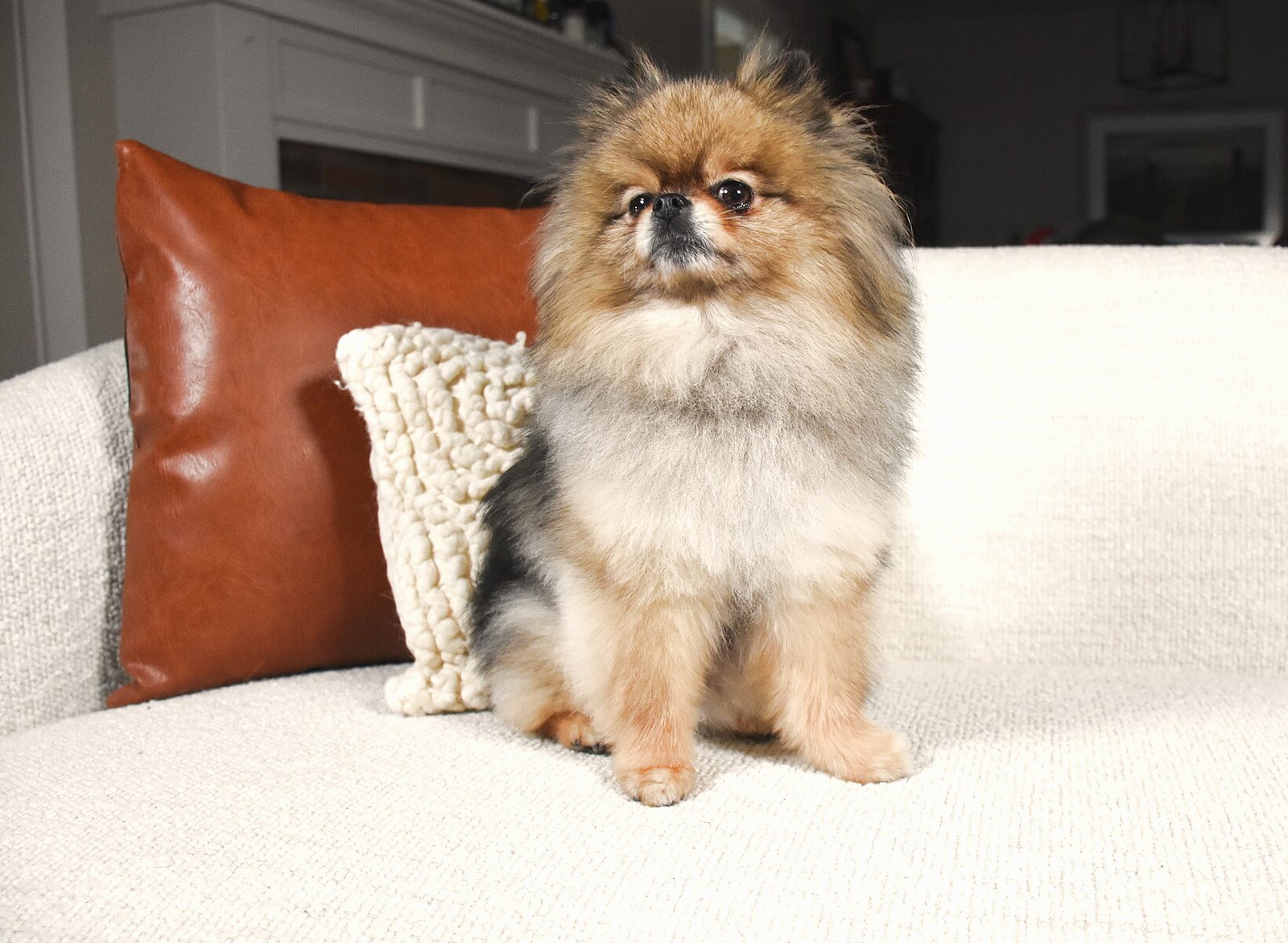
The finished product is a true double coat: a short, dense undercoat for insulation with longer, harsher guard hairs standing off the body above it. When both layers reach full density, the silhouette finally matches the breed photos, ruff and plume included. Most Pomeranians get there between 12 and 18 months, and some take past two years to reach full glory.
A finished coat also announces itself in the details the breed is famous for: the ruff standing off the neck and chest, the breeches on the back legs, the plume carried over the back. Density and texture still vary from dog to dog, which is why two finished Poms can look like different breeds in photos. Finished means both layers are at full working depth, not that every Pom wears the same silhouette.
Beignet’s coat felt truly finished at around 14 months, squarely inside that range. The day you notice it is usually ordinary: the coat stops looking like it’s becoming something and simply is something.
If you’re not sure whether a coat is finished or still arriving, part it to the skin. A finished coat shows dense, packed undercoat all the way down, with guard hairs that feel slightly harsh rather than cottony at the tips. A coat still in transition parts unevenly, thick in patches and thin in stretches where the skin is still easy to find.
Arrival is also when the maintenance contract starts. A full double coat needs brushing down to the skin several times a week, and the right tools stop being optional: a slicker that reaches through both layers and a metal comb to verify you actually got there.
Stage 4: The Adult Coat’s Yearly Rhythm
A finished coat is not a static coat. Adult Pomeranians molt their undercoat heavily once or twice a year, an event Pom owners call blowing coat, and for a few weeks the shedding outruns any brushing schedule. Intact females also commonly blow coat after a heat cycle, and mothers after a litter.
The first blow catches many owners off guard precisely because the coat just spent a year growing in; watching it fall out again feels like a malfunction. It isn’t. The guard hairs stay, the undercoat regrows on its own clock, and the whole playbook for surviving those weeks is in our blowing coat guide.
Timing varies by dog, and indoor living blurs the seasonal calendar enough that plenty of house Poms pick their own dates and keep them. The useful pattern is your own dog’s; it tends to repeat within a few weeks from year to year. Once you’ve lived through one blow, the next one stops being a surprise and starts being a season.
Our management for those weeks is boring on purpose: brushing moves from a few times a week to daily, and a bath followed by a thorough force-dry becomes the most productive de-shedding event on the calendar. The rest of the year, the coat asks far less. It holds its shape between molts, sheds moderately, and mostly needs the regular brushing schedule kept honest.
One caveat belongs here because it changes what you do: this rhythm assumes hair that falls out and grows back. Coat loss with red, flaky, or darkened skin under it, or bald patches that stay bald, is a vet visit, not a stage.
Stage 5: The Senior Coat Change
Age changes a coat the way it changes everything else: gradually, then unmistakably. Senior Poms commonly gray around the muzzle and face, their color softens and fades, and the coat slowly loses some of the volume it held in its prime. There’s no fixed start date; it arrives whenever it arrives, over years rather than months.
Our guide to this stage is Bella, who is 11. She’s a Pomeranian mix, which we confirmed with a DNA test, and she wears the least Pom-looking coat in the house: short and smooth, never did a dramatic seasonal blow, still sheds plenty. She never went through stages 1 through 4 the way the boys did, and that’s exactly why she’s useful here: what’s changed on her over the years is purely what aging does to a coat, not what growing one does.
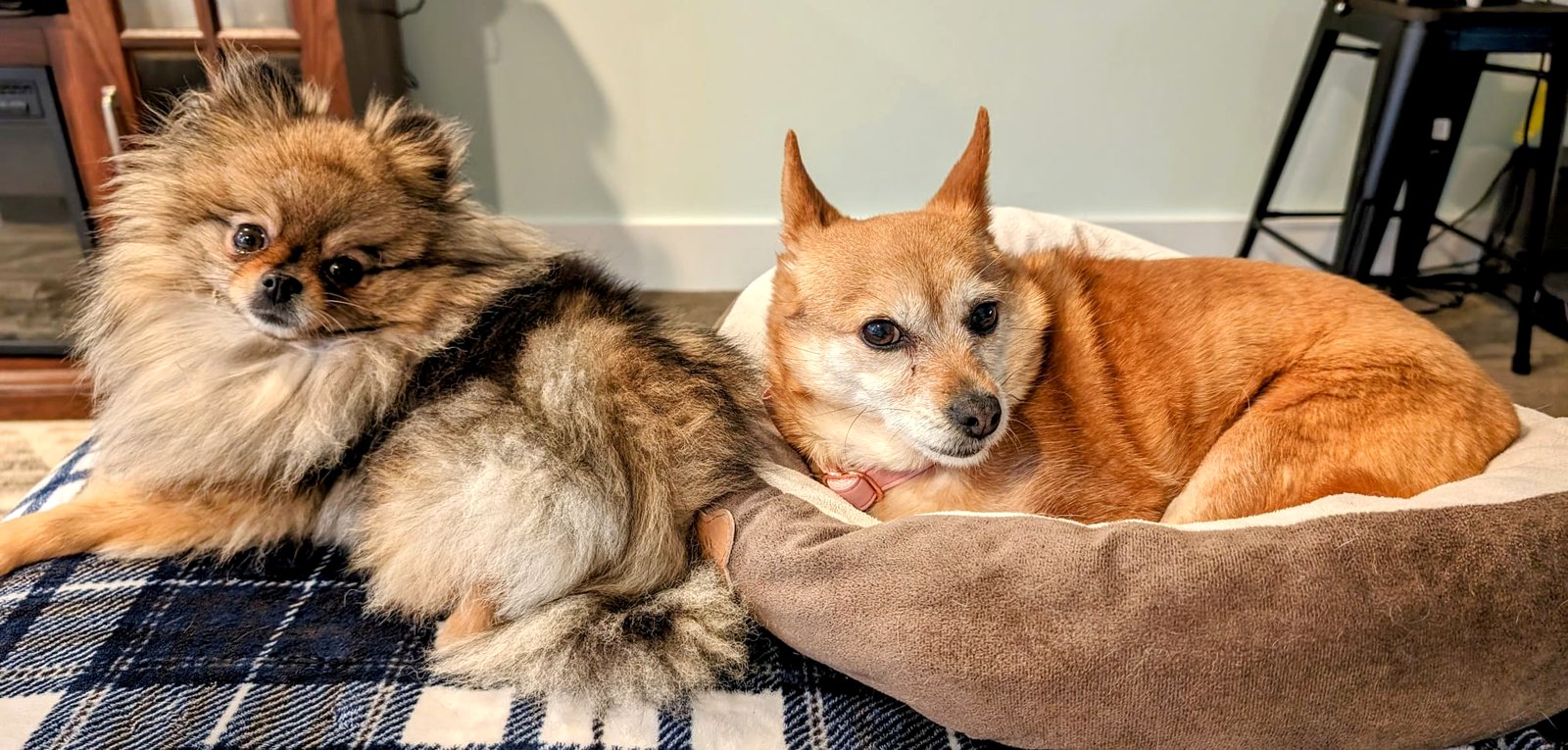
Between her photo at around 6 and her photos at 10, the change is easy to see: the face has grayed, the rich color has faded toward cream, the coat sits closer to her body. None of it changed her routine. She gets the same brush and the same spray as the boys, in shorter, gentler sessions on an older back and older hips.
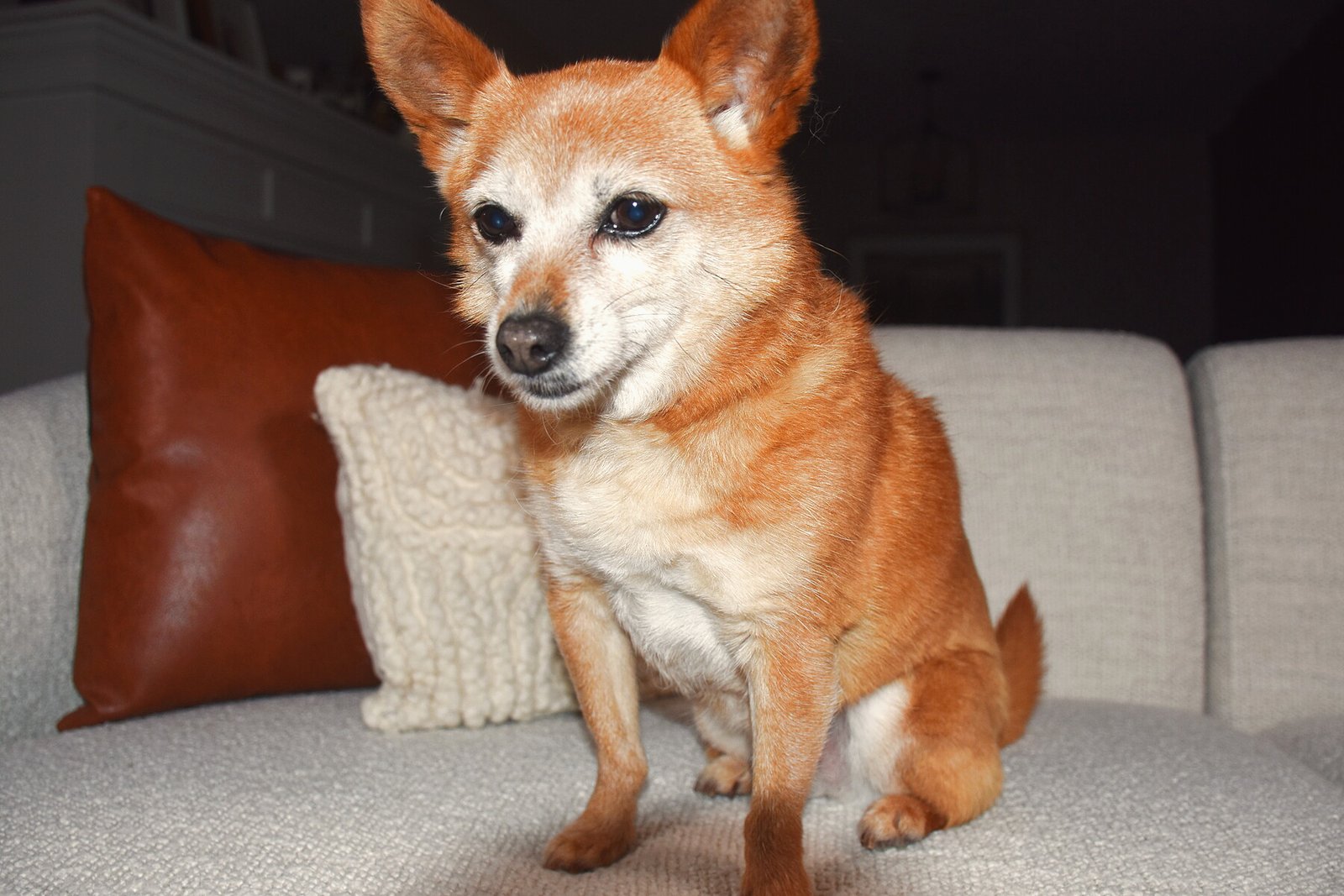
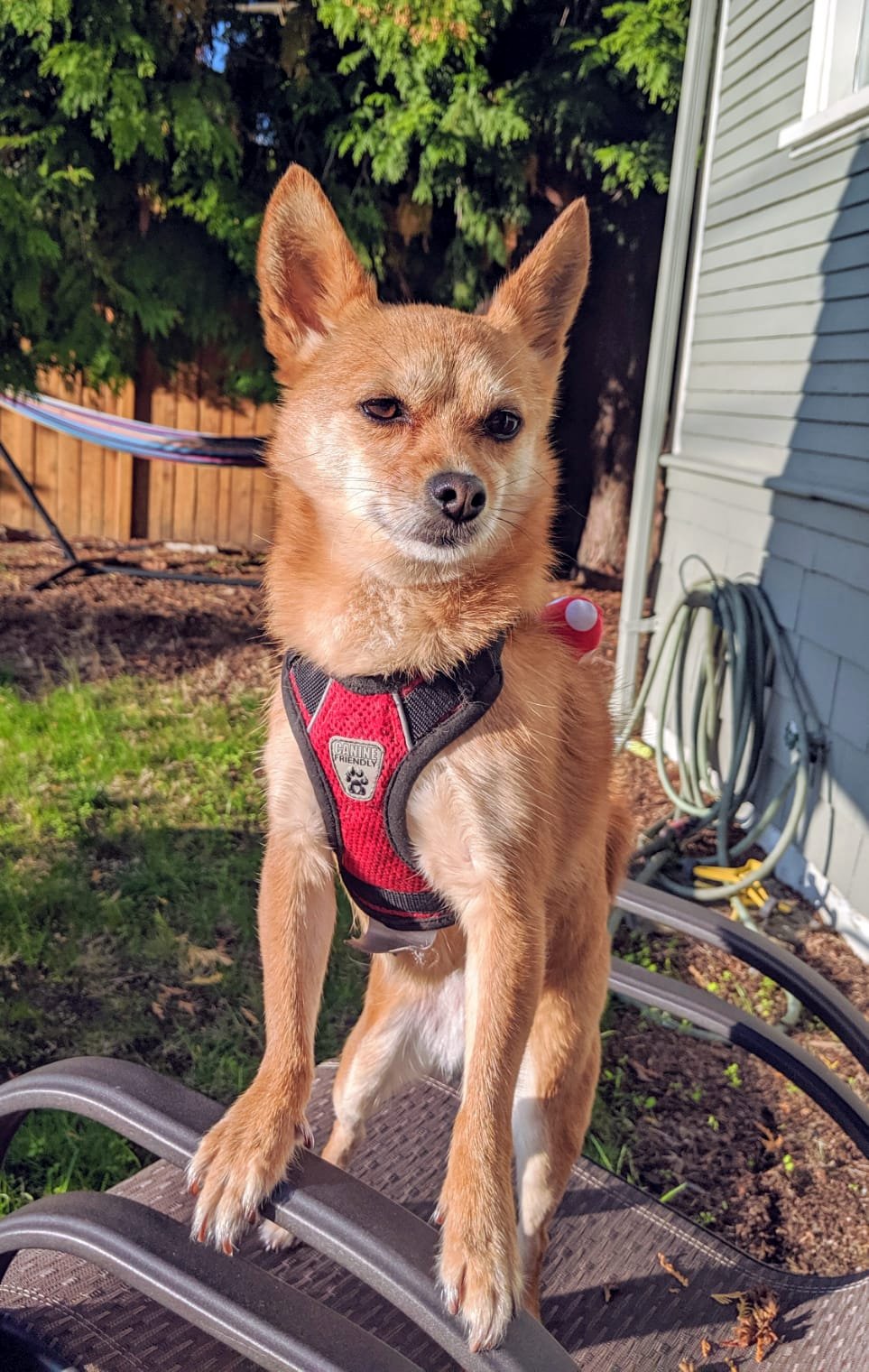
An aging coat is worth watching closely, because coat change and health change overlap in seniors. Graying, fading, and thinning spread across years is aging; sudden thinning, matching bald patches on both sides, or a coat that turns dry and brittle within months is a vet conversation. With a dog you’ve brushed for a decade, your hands usually notice before your eyes do.
Aging shows up below the coat too. Bella has a mild luxating patella, and what we changed around the house to protect it is in our senior Pom joint guide.
Five Stages, One Coat
Laid end to end, the arc is simple: a throwaway puppy coat, a messy year of construction, a finished double coat, decades of seasonal rhythm, and a slow, dignified fade. Every stage includes a stretch that looks alarming right before it looks fine. Knowing which stage your dog is standing in is the difference between panic and patience.
So place your Pom on the timeline: match their age and what you’re seeing to one of the five stages, then follow that stage’s guide for the depth this page deliberately leaves to them. The rest of our coat library, from haircut styles to the tool guides, picks up wherever on the arc you happen to be standing.