
Sherpa vs Sleepypod Air: Two Carriers, Ten Years, Three Pomeranians
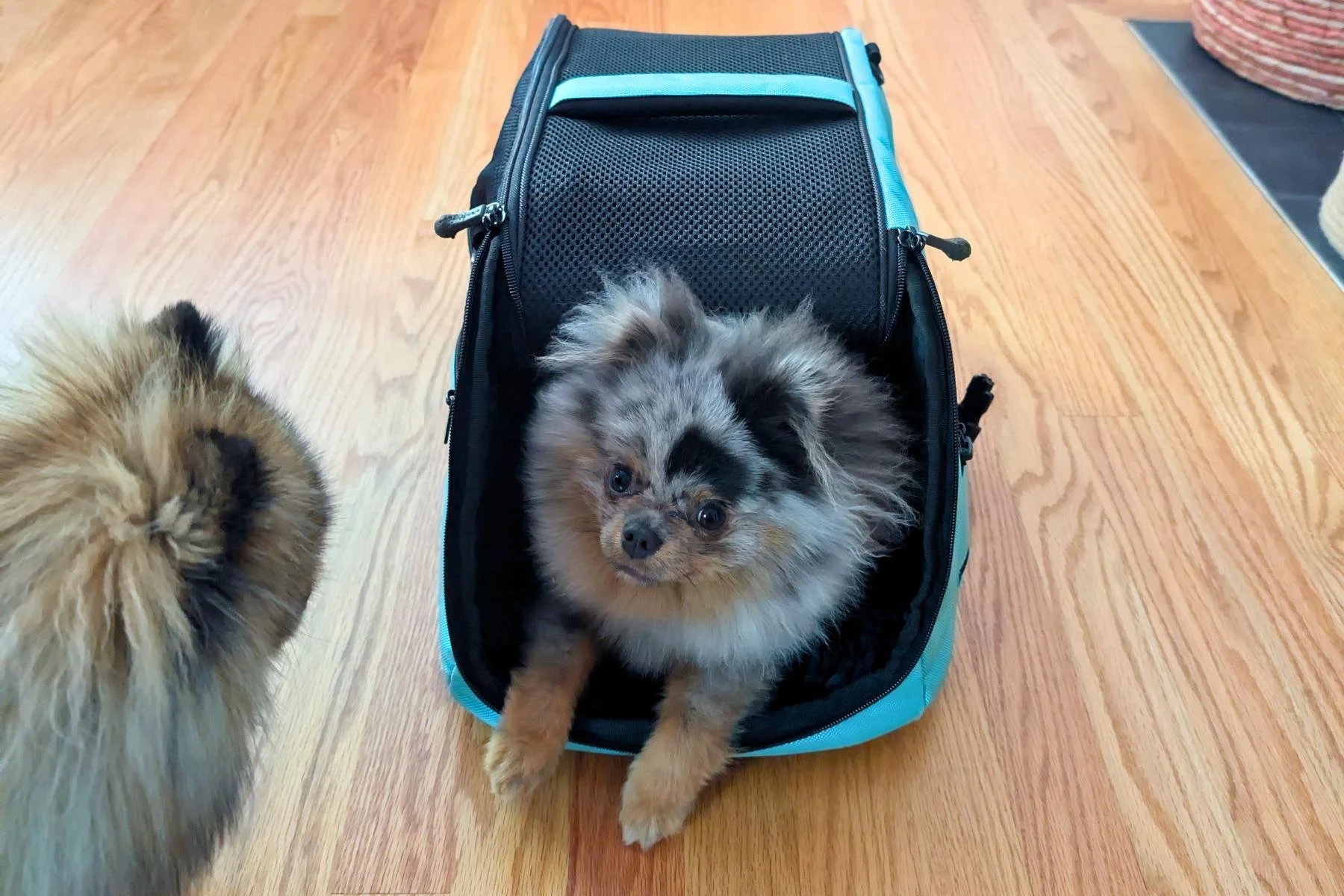
We used the Sherpa Original Deluxe for ten years across three Pomeranians and more cross-country flights than we can count. Then we switched to the Sleepypod Air because our Sherpas finally gave out and our needs changed.
This is what we know about both, after years of using each one in the situations that actually matter: flights, car rides, vet visits, and the TSA security line.
Why one carrier for everything
With small dogs, there's a real case for keeping carriers consistent across different forms of travel. Dogs build associations fast. The carrier becomes either a signal for anxiety or a neutral object they've been in a hundred times. The more contexts you use the same carrier across, the more neutral it becomes.
We've used the same carrier for car rides, vet visits, and flights. By the time we're at an airport, it's not a new thing. It's just the carrier.
That means the carrier has to actually work for multiple contexts, which raises the bar for what we're willing to recommend.
What we look for in a Pomeranian carrier
Pomeranians are small (most adults fall between 3 and 7 pounds) so almost any small carrier fits them physically. What matters is:
Privacy — Poms attract attention, and not all of them want it
Security — zippers a dog can't work open, a way to contain them at the security line
Durability — a carrier that works for both contexts takes real wear over time
Crash safety for car travel — an unsecured carrier in a car is a projectile; this is physics, not paranoia
Airline approval for air travel — specifically under-seat fit, which varies by aircraft
The Sherpa Original Deluxe: what we used for a decade
We bought two Sherpas over the years. A size small for when our Poms were puppies, and a medium once they grew into their adult weight. We flew cross-country with Bella in both sizes. When we got our puppy Boqui and began socializing him, he chewed through both size Sherpas in the span of a week. That made the decision to get a new carrier for us.
What the Sherpa does well:
Airline approval — it's part of Sherpa's Guaranteed On Board program and fits under the seat with room to spare on most aircraft; it has a bit of give to squish under a seat
Top and side openings — the top opening was genuinely useful at the security line, where you have to remove the dog and send the carrier through the scanner separately
Carrying strap — padded, adjustable, and comfortable for a full day of travel
Easy to clean — the liner is removable and machine washable; it also has a waterproof base
Interior leash hook — there's a clip inside to attach a harness so the dog can't bolt when you open it, but you need to have your own tether
Back pocket storage — roomier than expected and enough to hold what we needed (i.e. leashes, medication, water bowl, etc.)
What didn't work for us:
The mesh panels are very open — Bella is a nervous dog, and strangers constantly noticed her and tried to say hello. We started covering most of the carrier with a jacket, which helped but felt like a workaround
The top opening cuts both ways — Bella would try to pop her head out whenever it was unzipped, which caused problems mid-flight when attendants asked us to close it
Plastic zipper teeth — the zipper teeth sewn into the fabric are plastic, not metal. Boqui chewed through them while sitting in the unzipped carrier during boring vet visits, which meant the zipper couldn't fully close anymore. Both Sherpas were unusable after that
The Sherpa is a genuinely good carrier; it lasted us ten years. It's earned its reputation. If you have a dog who doesn't mind being visible and isn't a chewer, it's hard to fault.
Sizing the Sherpa for a Pomeranian
Most adult Pomeranians fit comfortably in a medium, which measures 17" L × 11" W × 10.5" H. The small works for puppies and very petite adults under 3–4 pounds. Beignet, at just over 4 pounds, is borderline.
Fit under the seat matters more than the carrier size number. Measure your specific airline's under-seat dimensions before booking. They vary significantly by aircraft type, and a medium that fits on one carrier may not on another. The Sherpa's spring wire frame helps because the rear can be compressed several inches to accommodate tighter spaces.
I’ve never had a flight attendant or check-in agent ask to see the dog or measure the carrier. In my experience, as long as your dog isn’t obviously cramped or the carrier is obviously too large, you should be okay. One or two inches over an airline’s measurement is likely fine for a carrier like the Sherpa, or what we’ll review next, the Sleepypod Air, because the frames have a bit of give.
The Sleepypod Air: what we switched to
After the Sherpas gave out, we wanted something chew-resistant. We landed on the Sleepypod Air. It's been our carrier for car travel since we got it, and we look forward to using it on a future flight. The criteria that matter for car travel: crash safety, privacy, and containment, overlap almost entirely with what we'd want on a plane anyway, which is exactly the point of keeping one carrier for everything.
What we like about it:
Privacy panel — the sides are solid, not mesh, and it comes with an optional cover for the top opening. For a nervous dog like Bella, this was the reason we switched. She can be in there without becoming a spectacle
Crash tested — independently certified by the Center for Pet Safety for pets up to 18 lbs. This is the only reason to feel good about using a carrier in a car rather than a crate
Interior safety tether — comes with a short clip to attach to a harness so the dog can't escape when panels open
Comfortable straps — more padded and comfortable than the Sherpa for longer carries
Expandable design — the sides fold up once you're past security or settled in the car, giving the dog more room
Front and back panels fold and velcro — clean, intentional design that makes it easy to let the dog look out without fully opening the carrier
What doesn't work as well:
The sides don't hold shape well when both panels are unzipped — the carrier is designed to release from compressed position so the dog gets maximum room, but it means loading the carrier at home usually requires one hand to hold it open. I’ve learned to side load and keep the top zipper mostly closed
Less pocket storage — shallower external pockets than the Sherpa
No easy-access top opening — the Sherpa's top access was genuinely useful at the security line; the Sleepypod requires going through the front or back panels, which is less convenient when you're also managing your bag and shoes
The look is modern — it's a more modern, structured aesthetic. Not everyone will like it
The expandable design is specifically built for the variability of airline seats. It compresses for takeoff and landing, then releases to give the dog maximum space once you're in the air. Given how unpredictable under-seat configurations can be depending on the aircraft, that adaptability is a real advantage. The solid privacy sides mean that even with a panel open, the dog isn't on display to the whole gate area.
One thing no carrier article tells you: get the window seat
The aisle is the worst seat for a dog. Flight attendants pass constantly, carts go by, people brush against the carrier. It's high-traffic and high-stimulation for the entire flight.
The window seat is quieter, more contained, and gives you something to brace against when you're managing the carrier. After flying cross-country with Bella, we won't book anything else.
Also worth knowing: some middle seats have a life vest storage box under the seat that reduces the available depth significantly. You can't know in advance which specific seat will have one since it depends on the aircraft configuration (and aircraft can change at the last minute). The Sherpa's compressible frame handles this well. If you're flying and unsure, window seat removes the variable entirely.
The security line is its own problem
Regardless of carrier, the airport security line requires removing your dog from the carrier entirely. The carrier goes through the X-ray machine; the dog goes through the metal detector with you. If your Pom is nervous or a flight risk, this is the highest-stress moment of the whole trip.
The Sherpa's top opening made this easier since you can reach in and lift the dog out quickly without fully dismantling the carrier. The Sleepypod's panel system is workable, but it's not as quick.
Either way: practice this at home before your first flight. Getting the dog out calmly while holding a leash, in a line of impatient people, is a skill worth rehearsing.
How to decide
We'd use the same framework for either dog:
If your dog is calm in carriers, not destructive, and you fly occasionally, the Sherpa Original Deluxe is a proven choice that held up for a decade across multiple dogs and trips. The top opening is a real advantage at security, and for a dog who doesn't mind being seen, the open mesh is fine.
If your dog is anxious, if you care about crash safety for car travel, or if you're flying frequently and want a carrier that adapts to whatever seat configuration you're dealt, the Sleepypod Air is worth the price difference. The crash rating is rare in this category. The privacy panel isn't a nice-to-have for a dog like Bella. It's the difference between a stressful trip and a manageable one.
Either way: use the same carrier for car rides, vet visits, and flights, and your dog should adapt quickly.
One note on the Sleepypod: it comes in several colors. The robin's egg blue that we bought is very blue. If you like a calm aesthetic, we'd steer toward the more neutral options.
The two carriers we recommend
Ten years of flights, car rides, and vet visits between them. Two different carriers for two different dogs.
FAQ: Pomeranian travel carriers
What size carrier does a Pomeranian need?
Most adult Pomeranians fit in a medium soft-sided carrier (approximately 17" L × 11" W × 10.5" H). The small size works for puppies and very petite adults under about 4 pounds. When in doubt, go medium — Poms generally prefer more room to turn and settle, and the fit under an airline seat is determined by the carrier's outer dimensions against the seat specifications, not by how small your dog is.
Can a Pomeranian fly in-cabin?
Yes, generally. Pomeranians are well within the size and weight limits for in-cabin travel on most U.S. airlines. Most airlines allow pets in the cabin as long as the carrier fits under the seat and the combined weight of pet plus carrier is under 20 lbs — a Pomeranian and a medium Sherpa come in comfortably under that. Always confirm the specific policy with your airline before booking, as requirements vary and change.
How do I keep my Pomeranian calm in a carrier?
Consistency matters more than any single technique. Using the same carrier for car rides and vet visits before you ever step on a plane means the carrier is already familiar by the time travel stress is highest. Beyond that: keeping the carrier covered reduces the stranger attention that triggers anxiety in dogs like Bella — a blanket over the Sherpa, or the Sleepypod's privacy panel, made a significant difference for us. Leave the carrier out at home so it stays a neutral object, and if your vet approves, a calming supplement on travel days can help for particularly anxious dogs.
Is a soft-sided carrier safe in a car?
Only if it's crash tested. An unsecured carrier in a car becomes a projectile in an accident. The Sleepypod Air is the carrier we're aware of in this category that has been independently crash-tested and certified by the Center for Pet Safety. The Sherpa has a seatbelt pass-through strap, but that's not the same as crash certification. For car travel specifically, the Sleepypod is the more responsible choice.
What about the dog needing to use the bathroom during a long flight?
Short answer: they generally don't, or can hold it. Pomeranians can comfortably go 4–6 hours without needing to eliminate, especially if you limit water in the hour or two before the flight. There are also pet relief areas in most airports. We've flown cross-country with Bella multiple times without incident. Some people line the carrier with an absorbent pad just in case — the Sherpa's waterproof base makes it easy to clean if something does happen.
