
Why We Switched to Washable Puppy Pee Pads (And Won’t Go Back)
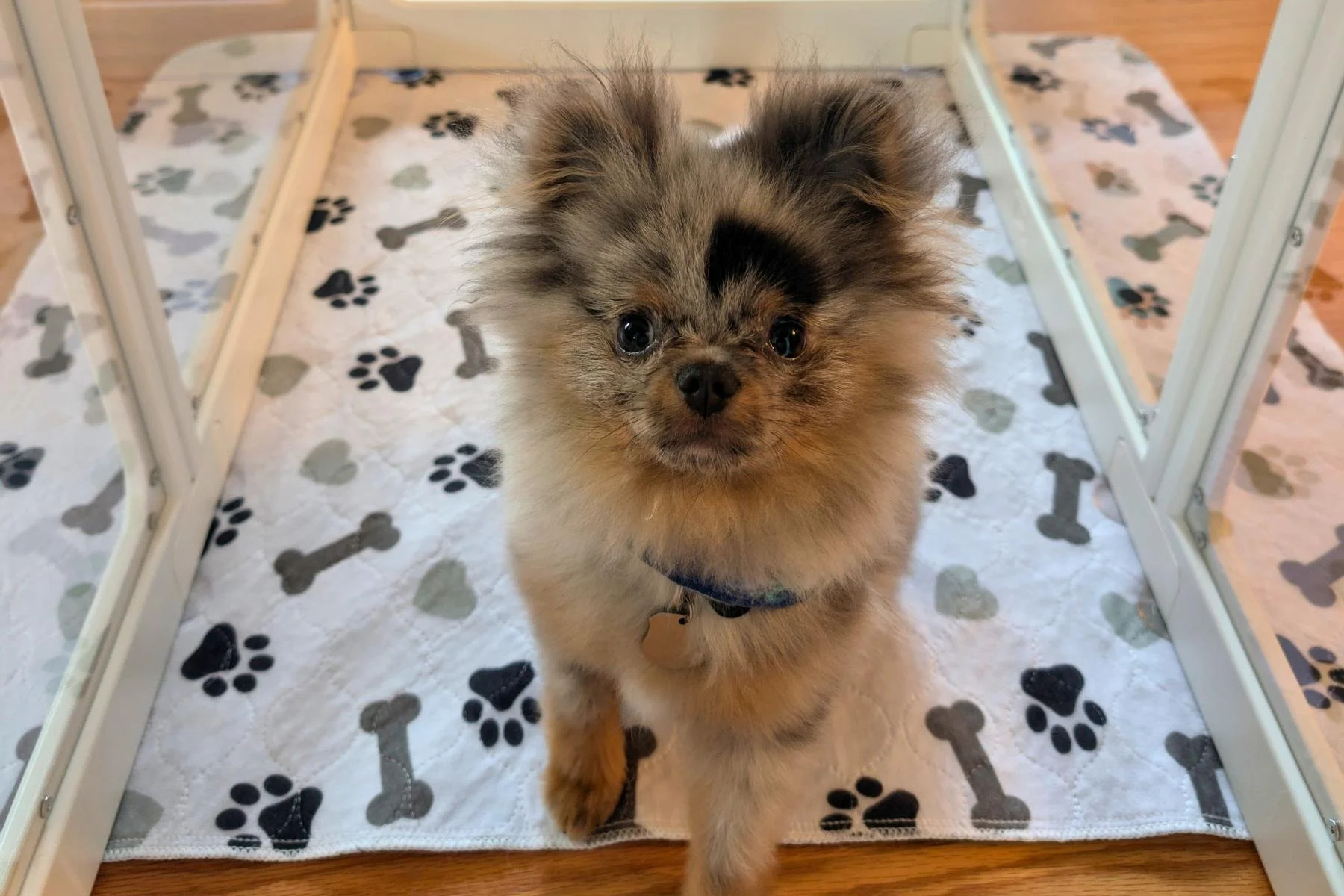
Quick answer: Washable pads cost more upfront, save money long term, and don’t contain the chemicals that make disposables a risk around puppies who chew and shred everything. The washing routine is straightforward. The peace of mind is not something you can put a price on. For Pomeranians specifically (small bladders, notoriously hard to house train, stubborn even when trained) a pad out at all times isn’t a training phase. It’s just how the household runs.
Some links in this post are affiliate links. If you purchase through them, I earn a commission at no extra cost to you. Everything recommended here is something we’ve personally used with Beignet and our Pom pack.
Our puppy shredded his disposable pads. Not occasionally — consistently, enthusiastically, as if destroying them was his actual purpose in life. We’d come home to confetti. The longer it went on, the more we worried about what he was ingesting — because disposable pads aren’t designed to be eaten, and there was no way to stop him from trying.
For a few weeks we didn’t leave him alone for more than an hour. That’s not sustainable, and it’s not the way you want to start life with a new puppy.
Switching to washable pads solved the problem immediately. There’s nothing to shred, no absorbent filling to pull out, nothing that comes apart in a way that creates a risk. That was the reason we switched. Everything else — the cost savings, the environmental benefit — came after.
Why Poms Specifically Keep Pads Out Forever
Pomeranians have notoriously small bladders and are notoriously stubborn about house training. This isn’t a reflection of intelligence — they’re smart dogs who have strong opinions about where and when they go. Most Pom owners will tell you the same thing: house training takes longer than expected, and even a fully trained Pom has days where they’d rather not go outside.
We keep a pad out at all times — not because our dogs aren’t trained, but because that’s just how a Pom household runs. It’s not a training phase you graduate out of. It’s a permanent fixture. And once you accept that, the math shifts completely. A disposable pad replaced daily or every other day, indefinitely, adds up to a lot of money and a lot of waste. A washable pad that gets laundered when needed and lasts for years is a completely different calculation.
The Problem with Disposables
Disposable pads work through superabsorbent polymers, the same technology used in diapers, combined with leak-proof plastic backing, fragrance, and sometimes attractant chemicals. None of this is designed to be ingested. For a puppy who mouths and shreds everything, that’s the issue.
Used as intended, disposables are fine. But a puppy treating one as a chew toy is a different situation entirely. And even if your puppy isn’t a shredder, the environmental math is hard to ignore once you realize pads are going to be part of the household indefinitely. Single-use anything, every day, for the life of the dog, is a lot of landfill.
How Washable Pads Have Gotten Better
When we got our first Pomeranian ten years ago, the washable pad category was thin. The options were stiff, slow to dry, and not particularly absorbent. Switching felt like a real trade-off. What’s available now is a genuinely different product.
Multi-layer construction locks in moisture, fast-dry surfaces that pull liquid away from the top layer immediately, anti-slip backing that holds the pad in place on hard floors, and sizes designed to fit a pen properly without bunching at the edges. The fast-dry improvement is what sold us. Ours come out of the wash and are dry within 30 minutes hang-drying. They also look just as nice as when we first bought them.
What We Use and How
The Green Lifestyle Washable Puppy Pee Pads are what we use and recommend. The absorbency holds up through heavy use, high heat washing is safe — you’re actually sanitizing them, not just rinsing — and the anti-slip backing keeps the pad in place even when the puppy is doing laps.
They have a ton of different size options, so worth measuring your pen, carrier, etc. to find the right size for your space. We actually bought two of their 2-packs, one 18×24 and one 34×36. The larger one is in our puppy pen and the smaller one stays out all the time for our senior Pomeranian. She’s potty trained but still has the occasional accident, and it makes our life so much easier to have a dedicated pee spot inside for her. When we have company over, we just fold it up and put it away.
For washing: remove solids first — shake outside or scrape into the bin. Then straight into the machine on a warm or hot cycle. Out in about an hour, air dry flat or low heat in the dryer. No special detergent required, though fragrance-free is worth considering for a dog who will be sniffing the pad all day.
Washable Pads Are Not Perfect, But the Benefits Win
Washable pads ask more of you than disposables do. Solids have to come off before the wash — the machine doesn’t handle that, and it has to happen every time. You need to launder on demand rather than on your own schedule. The upfront cost is higher than a box of disposables.
For us, none of that outweighs what we get in return: no shredding risk, no chemicals we can’t control, no daily bin run, and a pad that costs pennies per use once you’ve bought it. Three Pomeranians in, we haven’t gone back.
The Rest of the Setup
The pad is one piece of a pen setup that actually works. Check out the rest of our recommended essentials here at The Favorites page.
