
A Calm Daily Routine for Pomeranians (That Actually Reduces Anxiety)
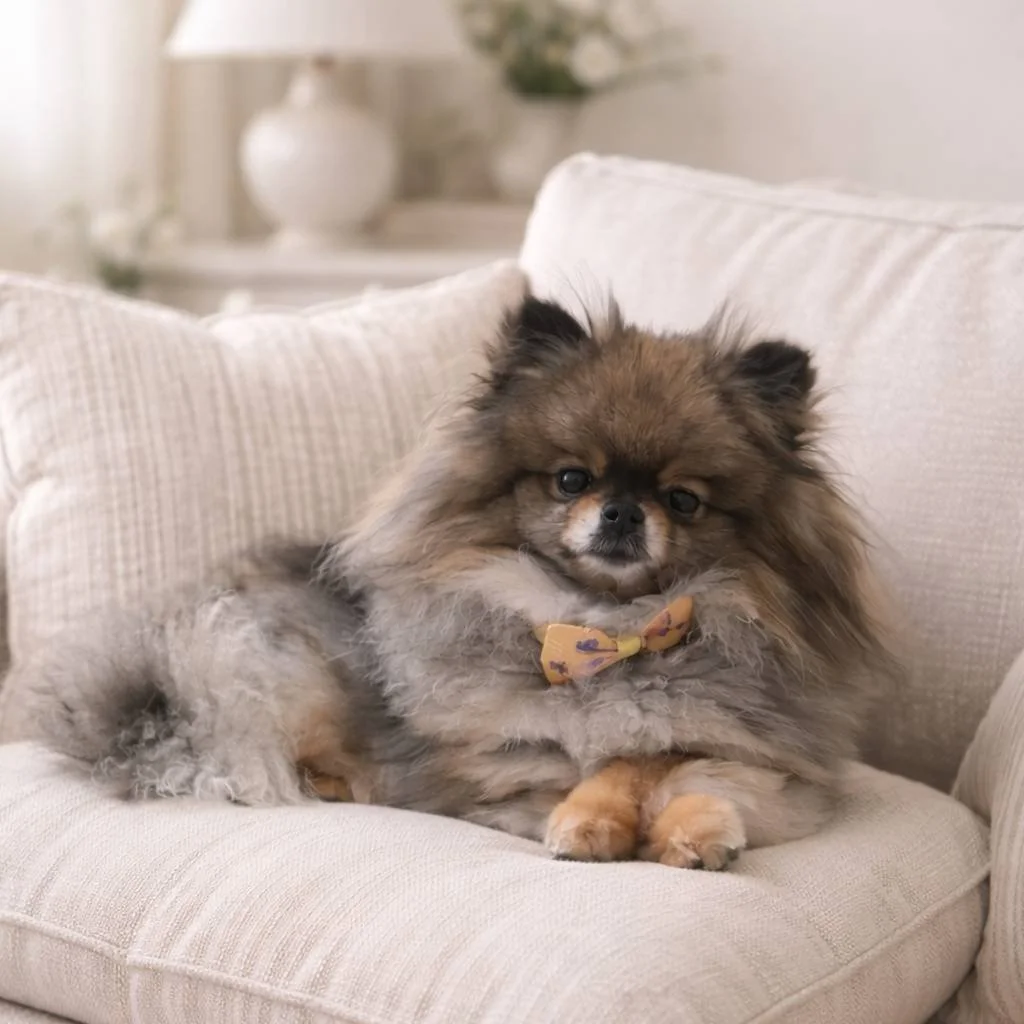
The most common thing people say when they meet Beignet is some version of: he's so calm. How do you do that?
The honest answer is that it's not a routine. It's not a schedule, or a specific sequence of activities, or a training protocol. It's something simpler than that — and also harder to describe, because it's less about what you do and more about how consistently you do it.
Beignet is calm because he trusts that he'll be told what's happening.
What Pomeranians actually need
Pomeranians are alert, communicative dogs. They notice everything: when you pick up your keys, when your energy changes, when the day feels different from yesterday. That sensitivity is part of what makes them such good company. It's also what makes unpredictability hard for them.
The restlessness that looks like anxiety in a Pomeranian is usually just a dog trying to read a situation that hasn't been explained to them. They're not being difficult. They're paying attention and not getting enough information back.
What settles Beignet isn't tiring him out or maintaining a rigid daily schedule. It's acknowledgment. When I tell him what's happening, he relaxes.
What this looks like in practice
If I grab my purse and keys, Beignet gets up and follows me. He wants to come. If I don't say anything, he'll follow me to the door and wait to see what happens. But if I tell him "no, you're staying," he pouts — genuinely, visibly pouts — and then goes and lies down. He didn't like the answer, but he got one. That's enough.
The same goes for the things he likes. He knows "walk" and "ride." When he hears either word, he lights up completely. When we get home from a walk, he goes and takes a nap. The outing happened, it was good, it's over. The predictability of the sequence lets him settle into the next part of the day without lingering restlessness.
Evening is the easiest part. He watches TV in bed with me. When I ask "do you want to go to bed?" or just get into bed myself, he waits by the side of the bed for me to pick him up. Same every night. He knows what comes next.
Morning is when we brush. A few minutes while he's still relaxed, before the day picks up. It's calm because it's familiar. He's been part of this sequence long enough that the brush coming out doesn't mean anything stressful. It's just what happens in the morning.
The thing that actually matters
When I'm calm and predictable, Beignet is calm and predictable. That's not a training outcome. It's just how it works.
If your Pomeranian seems anxious or hard to settle, the first question worth asking isn't what routine to add — it's whether they reliably know what's coming next. Not a strict schedule, but consistent signals. The same words for the same things. An acknowledgment before you leave instead of a quiet disappearance. A predictable end to the day.
Pomeranians don't need a lot. They need to feel like they're in on it.
For the handling and grooming side of building this kind of ease, the part that makes brushing calm rather than something to tolerate, the Pomeranian Care Simplified series covers each piece in detail.
