
Best Grooming Tools for Pomeranians (The 3 You Actually Need)
What to use, what to skip, and why most brushes fail dense double coats
Some links in this post are affiliate links. If you purchase through them, I earn a commission at no extra cost to you. Everything recommended here is something we've personally used with Beignet and our Pom pack.
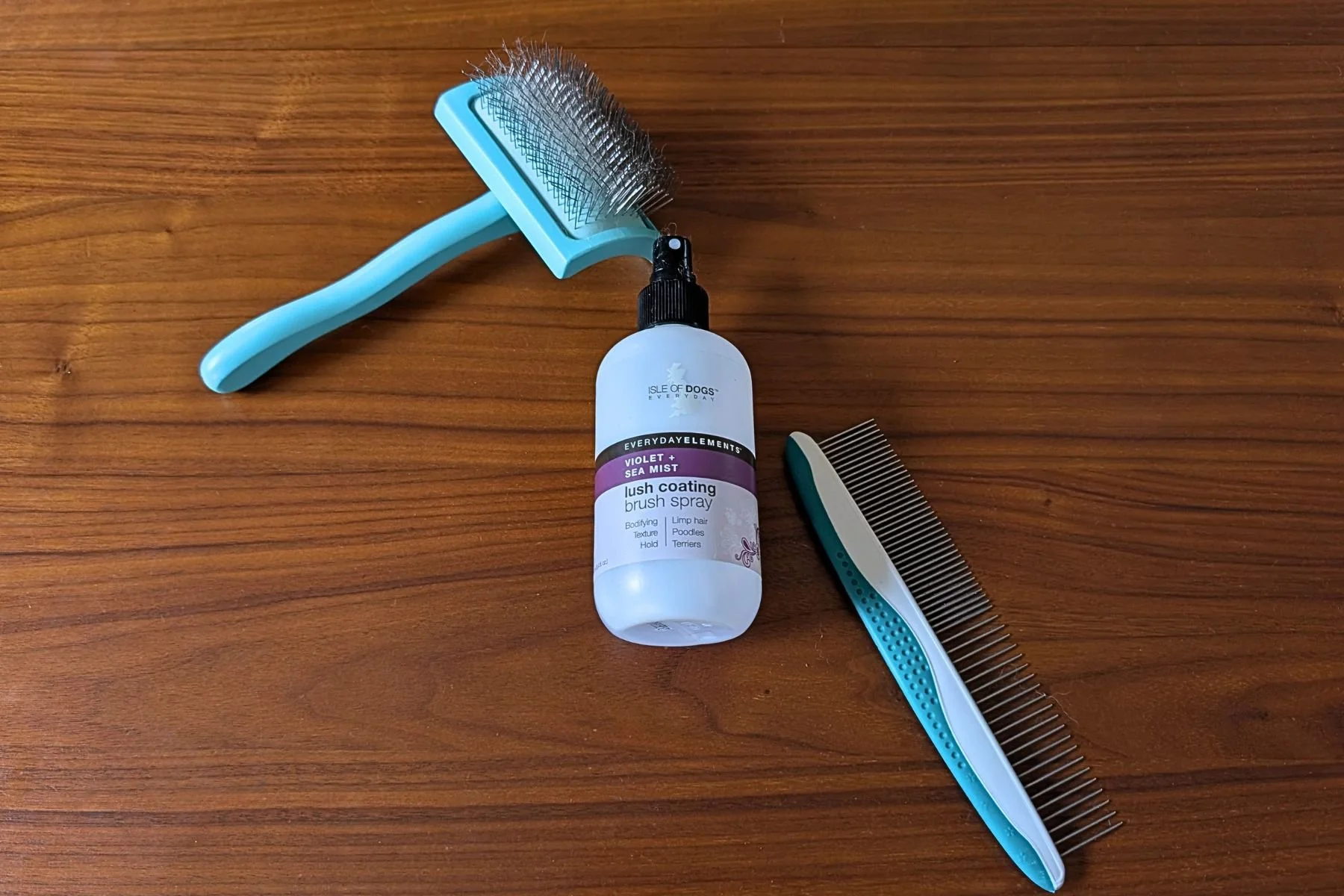
The three grooming tools that work for Pomeranian double coats are: a lightweight conditioning spray, a long-pin slicker brush, and a metal greyhound comb — used in that order.
If you’ve ever brushed your Pomeranian regularly and still found mats behind the ears or along the legs, you’re not alone.
Most grooming frustration doesn’t come from inconsistency.
It comes from using tools that were never designed for a dense double coat in the first place.
Pomeranians don’t have “small dog” coats.
They have:
A compact, soft undercoat that sits close to the skin
A longer outer coat that traps loose fur
Friction zones that tangle quietly underneath
When a brush only skims the surface, the outer coat may look fluffed, but the undercoat continues compacting underneath.
That’s where mats happen.
After grooming multiple Pomeranians over the years, from full-coated adults to coat-transition puppies, we learned something simple:
You don’t need more tools. You need tools that physically reach the undercoat without creating friction.
Below is the exact three-step system we use, in order, to maintain a dense Pomeranian coat without tension or rushed sessions.
Why Most Grooming Tools Don’t Work on Pomeranians
Pomeranians have a soft, dense undercoat and a longer outer coat. Mats start underneath, close to the skin. Not on the surface.
Most brushes marketed for “small dogs” share the same issues:
Are too short to reach the undercoat
Bend or snag instead of separating coat
Create friction that leads to tangling over time
This is why frequent brushing doesn’t always prevent matting. The outside coat layer might look better, but unless you're getting at the undercoat, mats are still forming underneath.
The Tools That Makes a Big Difference
Beignet is our classic full-coated Pomeranian. Before we changed our grooming approach, brushing felt tense. He’d pull away. It felt rushed.
Once we stopped brushing dry and switched to tools that actually reached the undercoat without pulling, Beignet became more relaxed and comfortable.
Now it’s part of our quiet morning rhythm, just a few minutes while he’s relaxed and still.
That’s how we knew the tools — and the order — were finally right.
1. Chris Christensen Big G Long-Pin Slicker Brush
This is the foundation of our grooming routine. Using a long pin slicker brush made the biggest difference.
Long, flexible pins that reach the undercoat without scraping skin
Designed specifically for dense, double-coated breeds
Removes loose fur before it compacts into mats
We’ve tried cheaper slickers. You can feel the difference immediately when line brushing.
This one glides instead of catching. The coat separates cleanly instead of puffing or tangling.
2. Isle of Dogs Lush Coating Spray
Never brush a Pomeranian’s coat completely dry.
Dry brushing creates friction. Over time, friction leads to breakage, pulling, and coat damage, even when you’re using the right brush.
A lightweight leave-in conditioning spray:
Adds slip so the brush glides instead of snagging
Reduces breakage and static
Makes brushing more comfortable for the dog
We lightly mist the coat before brushing, especially during quick maintenance sessions. It’s a small step that makes a noticeable difference.
3. Greyhound Comb (Fine + Medium Teeth)
The comb isn't meant to detangle the entire coat. It's the finishing step that tells you whether the brushing actually worked.
After line brushing, we run the comb through friction areas: behind the ears, under the collar, along the chest.
If it glides to the skin without catching, the session is done. If it snags, there's still compacted undercoat the brush missed.
Beignet tolerates this part best of all, which is probably because by this point the real work is already done and it just feels like a scratch.
Used alone, it won't prevent mats. Used after brushing, it's what keeps small tangles from quietly becoming a grooming emergency. If you want to learn more, here's what to look for in a comb for a Pomeranian double coat.
The Order Matters
Light mist of conditioning spray (never brush dry)
Long-pin slicker brush
Comb to check and finish
The tools we recommend
If you want to replicate Beignet’s routine, these are the exact tools referenced above:
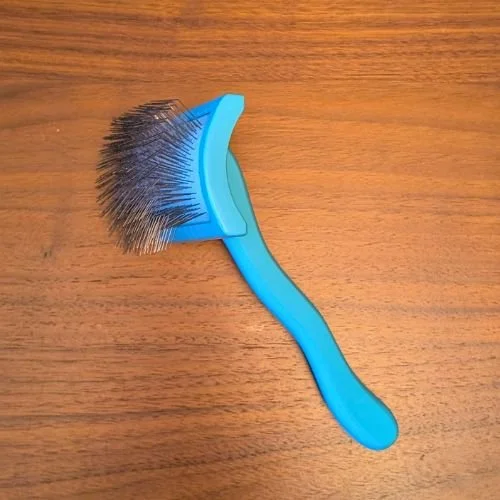
Chris Christensen Big G Long-Pin Slicker Brush
Best for reaching the undercoat without pulling
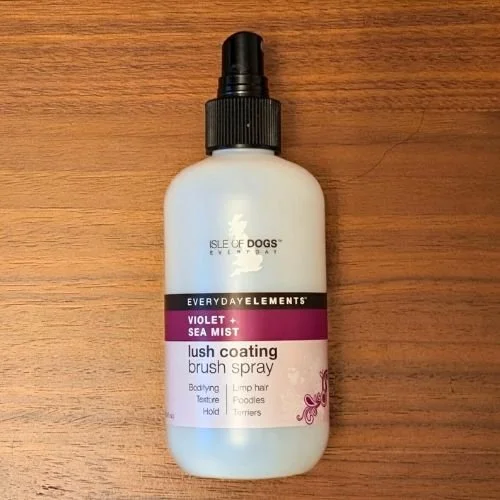
Isle of Dogs Lush Coating Spray
Best for reducing friction
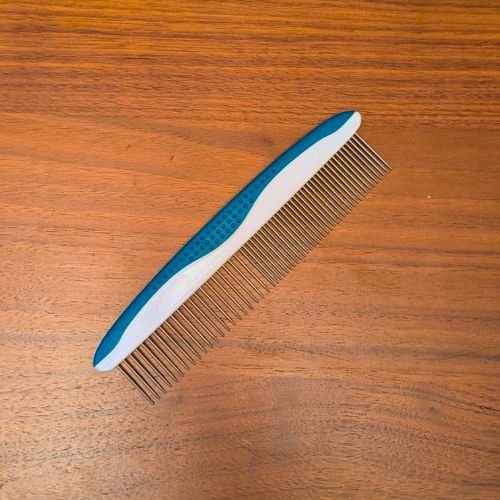
Greyhound Comb
Best for mat detection
Shopping for a new Pom? Beyond the brush, these are the other Pomeranian home and lifestyle items we can't live without.
For the home side of the routine (managing fur between sessions), this is the vacuum we use and the air purifier that handles dander.
FAQ: Grooming Tools for Pomeranians
-
The best brush for adult Pomeranians is a long-pin slicker brush.
They are designed to reach through a dense double coat without scraping the skin. A properly designed long-pin slicker, like the one we recommend above, separates the coat in layers, reduces resistance, and prevents friction-related breakage.
-
Yes, but not as a primary tool.
A metal greyhound-style comb is used after brushing to check your work and catch small tangles in friction areas like behind the ears and along the legs. The comb isn’t meant to detangle the full coat; it’s a finishing tool that prevents small knots from becoming larger mats.
-
It’s not recommended.
Dry brushing creates friction, which leads to breakage, static, and discomfort, even if you’re using the right brush. A light mist of conditioning or detangling spray adds slip so the brush glides cleanly through the coat instead of pulling against it.
-
You only need three:
A long-pin slicker brush
A lightweight conditioning spray
A metal finishing comb
More tools don’t improve results. The right tools, used in the right order, are what prevent matting and make brushing comfortable and efficient.
