
How to Line Brush a Pomeranian (Step-by-Step Guide for Double Coats)
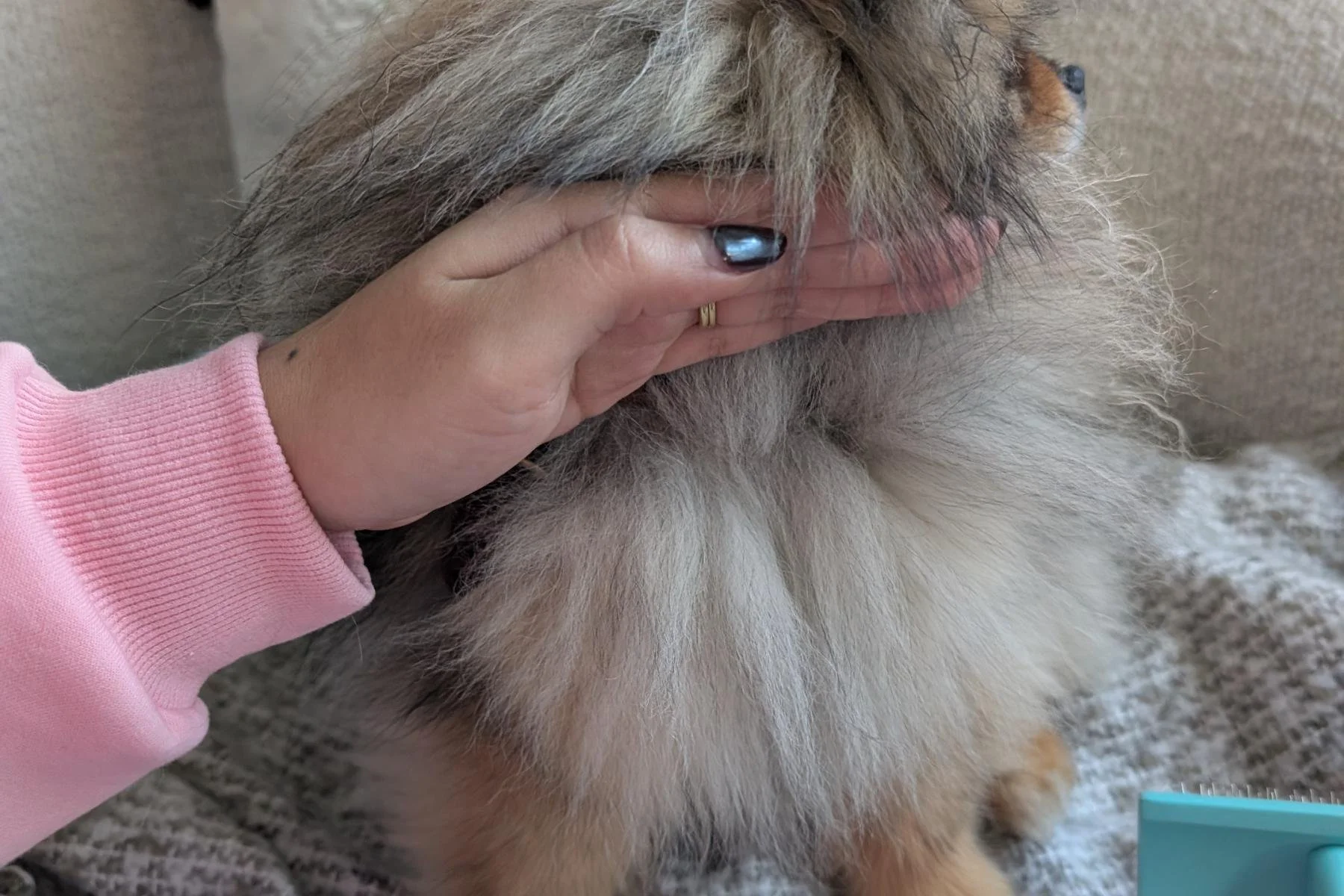
Line brushing separates a Pomeranian’s dense double coat from the skin outward, preventing hidden mats beneath the surface
Quick Answer
- Line brushing is a grooming method where you brush a Pomeranian’s coat in small horizontal sections, starting at the skin and working outward
- It ensures the dense double coat is fully separated, preventing hidden mats and undercoat compaction
- Without line brushing, you're only brushing the coat surface
Line brushing sounds technical, but it’s surprisingly simple.
At its core, it means brushing in layers, starting at the skin and working outward—rather than brushing the top of the coat all at once.
Why it matters for Pomeranians
Because of their coat density, brushing the surface:
misses loose undercoat
hides early mats
creates fluff without maintenance
Line brushing ensures every layer gets attention. For dense double-coated breeds like Pomeranians, surface brushing alone cannot properly separate the undercoat or protect outer guard hairs from matting.
The tool makes or breaks the method
Line brushing only works if:
the brush can reach the base of the coat
the pins are long enough to part hair cleanly
there’s no excessive flex or drag
Without the right brush, line brushing becomes frustrating or uncomfortable—especially for small dogs.
That’s why most home grooming attempts fail not because the technique is wrong, but because the tool can’t support it.
How to Line Brush a Pomeranian (Step-by-Step)
Line brushing a Pomeranian means working in small, horizontal sections so the brush reaches the skin and fully separates the dense double coat. The goal is not surface fluff. It’s complete undercoat separation.
Here’s how to do it correctly:
1. Lightly mist the coat
Before brushing, apply a light conditioning spray designed for brushing. The coat should feel lightly hydrated, not wet. This reduces friction and helps the slicker brush glide through the double coat instead of dragging.
2. Lift a small horizontal section
Starting at the lowest part of the body (often the back leg or side), use your free hand to lift a thin horizontal “line” of coat upward. You should be able to see the skin beneath the section you’re about to brush.
Small sections are key. If the section is too thick, the brush won’t fully reach the undercoat.
3. Brush from the skin outward
With a long-pin slicker brush, gently brush from the skin outward through the lifted section. Use short, controlled strokes. The brush should move smoothly if the coat is properly hydrated.
The goal is to separate the soft undercoat without snapping the outer guard hairs.
4. Work in rows up the body
Once one section is fully brushed through, drop another thin horizontal line and repeat the process. Work methodically in rows up the body.
This ensures the entire double coat, not just the surface, receives attention.
5. Check your work
After completing an area, run a fine-toothed comb lightly through the coat. If it glides easily to the skin, the section is properly separated. If it catches, go back and brush that area again.
Line brushing should feel calm and predictable, not rushed.
→ The grooming setup we use on our Pomeranians for effective line brushing
Common Line Brushing Mistakes
Line brushing is simple, but small errors can make it ineffective or uncomfortable.
Brushing too large a section at once
If the section is too thick, the brush only moves through the surface. The undercoat stays compacted near the skin, where mats begin.
Skipping conditioning spray
Dry brushing increases friction in a dense double coat. Without light hydration, the brush drags instead of glides, making true line brushing difficult.
Using short or flexible pins
Short pins can’t reach the base of a Pomeranian’s coat. Excessively flexible pins bend around the undercoat instead of separating it.
Only brushing the top layer
Surface brushing creates fluff, but it doesn’t maintain coat structure. Hidden tangles remain underneath.
Rushing the process
Line brushing works because it’s methodical. Rushing leads to missed sections and uneven separation. You don’t need to brush your Pomeranian as often as you might think.
When done correctly, line brushing preserves coat density, prevents mat formation, and makes grooming sessions shorter over time.
FAQ: Line Brushing a Pomeranian
-
Most adult Pomeranians with a full double coat benefit from line brushing 2–4 times per week. During heavy shedding or coat transitions, brushing may need to be more frequent.
The goal isn’t daily fluffing. It’s complete separation of the undercoat so mats don’t form near the skin.
-
Yes.
Line brushing only works if the brush can reach the base of a dense double coat. A long-pin slicker brush is typically best for Pomeranians because it can separate the undercoat without excessive drag. Short pins or overly flexible brushes often skim the surface instead of fully parting the coat.
-
Yes, but gently.
Young puppies may not yet have a fully developed double coat. During early coat changes (sometimes called the “puppy uglies”), brushing should be lighter and more gradual. The focus is building positive grooming habits rather than achieving full separation.
-
For dense double-coated breeds like Pomeranians, yes.
Surface brushing alone misses compacted undercoat near the skin. Line brushing ensures each layer of the double coat is separated properly, which helps prevent hidden mats and protects coat density over time.
-
After brushing a section, a fine-toothed comb should glide from the skin outward without catching. If the comb snags, the undercoat likely isn’t fully separated. Proper line brushing feels methodical and calm — not rushed or forceful.
