
Overstimulation Isn’t the Problem. Missing Stillness Is
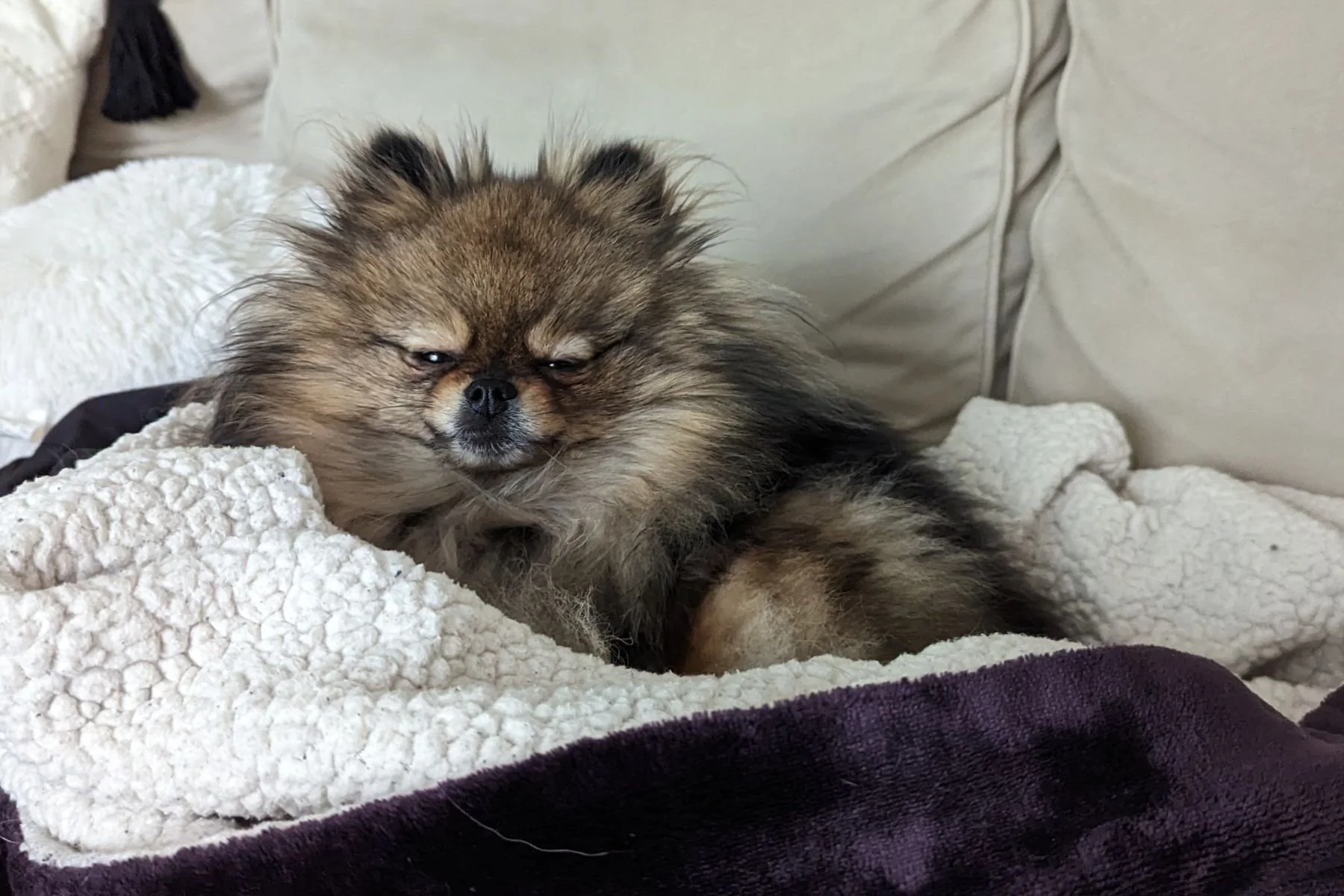
Pomeranians are alert, curious, and engaged. That’s part of their charm.
It also means days can fill quickly with movement, play, and interaction — while stillness quietly disappears.
Why stillness is important
We don’t notice the absence of stillness until we ask for it during brushing, grooming, quiet routines, or vet visits.
Moments that require a dog to relax and be comfortable while doing very little.
This is why stillness is first thing we build before we start our grooming routine.
If stillness hasn’t been part of daily life, those moments feel unfamiliar and, sometimes, impossible.
How to create still moments
What actually works is letting calm moments exist without immediately filling them.
A pause before lifting. A moment after play. Letting transitions settle instead of rushing through them.
Stillness is a skill, and like any skill, it has to be practiced.
For Beignet, this looked like changing how we woke him up from naps.
We used to rush him throughout the day, on our way to work, to a walk, or to dinner, waking him from a peaceful nap and immediately asking for full alertness. It meant he never knew if rest would be interrupted.
So we started adding a pause.
We’d say “Good morning,” then wait. Or leave the room briefly and come back.
Over time, he began to yawn, stretch, step out of his bed slowly, and then engage. Calm, alert, ready.
Those quiet transitions changed everything.
Other ways this can look
Try observing your dog’s natural rhythm — before or after walks, play, or meals — and experiment with where you can add small pockets of quiet.
Stillness doesn’t have to mean alone time. Sit with your dog. Share the pause.
You don’t need perfect five-minute rituals. Just slower moments, repeated often enough to stick.
The overall takeaway
Stillness isn’t the absence of activity. It’s the foundation that makes calm possible.
And when you build it into daily life, everything else gets easier.
