
When Grooming Problems Start Long Before the Groomer
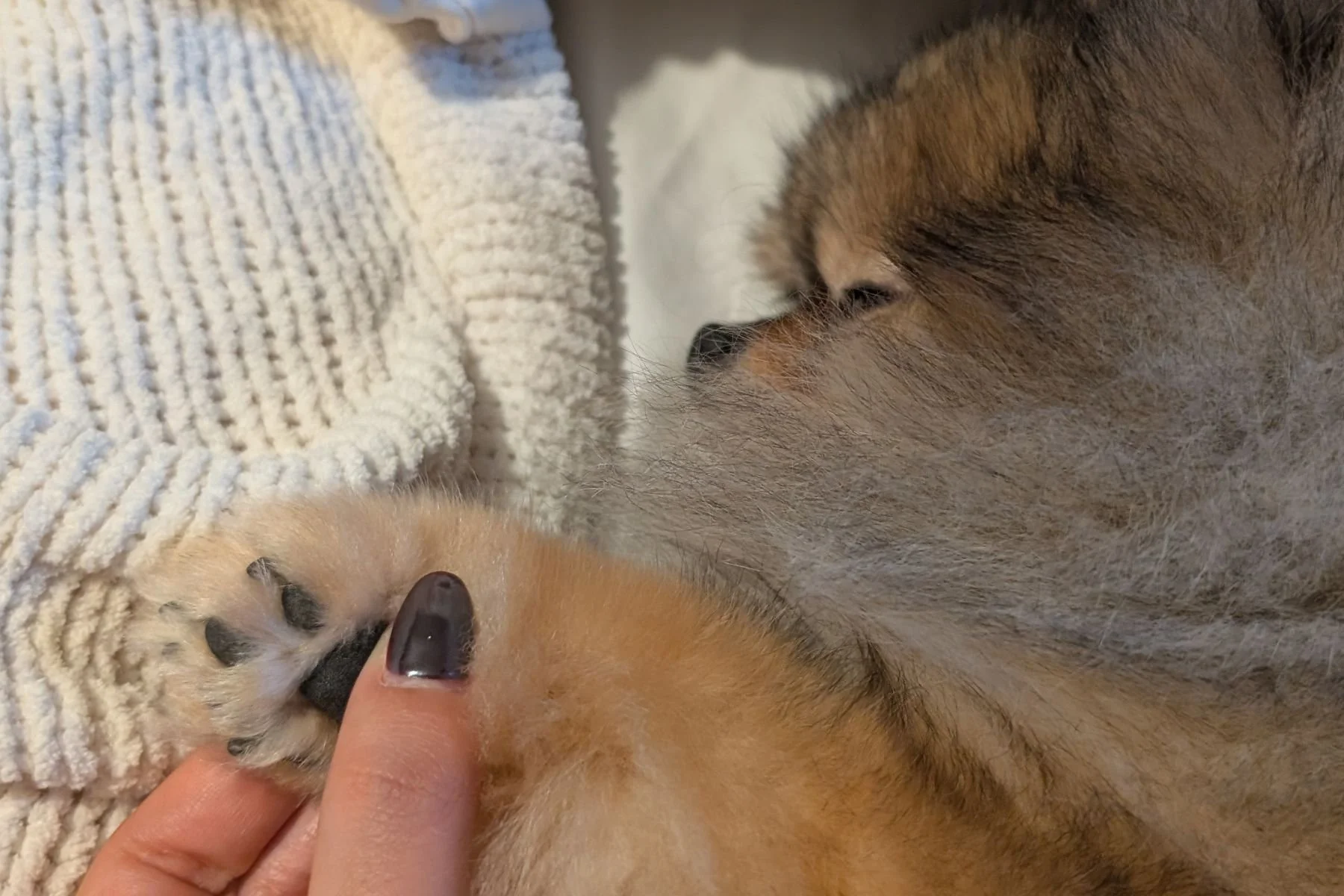
Many Pomeranian owners are surprised when grooming suddenly becomes difficult.
Their dog resists brushing. Struggles at the groomer. Feels tense during routine care.
It often feels like this comes out of nowhere, especially when a dog is otherwise affectionate, social, and well cared for.
In most cases, it didn’t start at the groomer.
Why good grooming manners are important
Grooming asks for a very specific combination of things all at once:
stillness
close handling
prolonged touch
unfamiliar positioning
For many dogs, this is the first time all of those are required together.
At home, touch is usually brief. Movement is encouraged. Stillness is optional. Handling happens in pieces, not as a sustained experience.
When grooming becomes regular, often months after they’ve settled into your home, everything changes at once.
Resistance isn’t about attitude. It’s about unfamiliarity.
How to build grooming tolerance
Research around cooperative care and handling tolerance shows that dogs are far more comfortable with grooming when the building blocks are already familiar.
The good news is that doesn’t necessarily mean you have to practice grooming early, although that helps. It means normalizing the ingredients grooming is made of.
For many households, that looks like:
predictable, calm handling during everyday moments
brief periods of stillness that aren’t tied to restraint
touch that doesn’t always lead to an outcome
When those pieces already exist, grooming feels like a continuation—not a sudden demand.
Beignet’s experience
When Beignet first started getting groomed, he hated having his ears touched. He’d shake his head, pull away, and find every non-verbal way to communicate his displeasure.
Our groomer mentioned it casually, and we took it home as homework.
We started by touching his ears once per day. At first, it was just a brief brush of our fingers. No holding. No inspection.
Then we worked up to touching for a few seconds, then lightly holding, then gently moving his ears so we could look inside.
He definitely thinks we’re strange for being so obsessed with his ears, but he stopped reacting at the groomer. Now he couldn’t care less.
Other ways this can look
Some dogs need more frequent, very short handling moments to build familiarity. Others benefit from longer, quieter contact less often.
Some dogs relax more with confident, efficient touch. Others soften with slower, more deliberate handling.
What matters isn’t the exact approach. It’s that grooming isn’t the only place these experiences happen.
Start small:
Run your hands over your dog’s coat, then walk away.
Pick up one paw, then put it back down.
Pause before it becomes a “session.”
Small, repeatable moments stick better than big changes. When your dog is ready, you can use our detangling routine to start getting rid of mats.
The overall takeaway
Most grooming struggles don’t mean a dog is difficult.
They usually mean grooming is asking for skills the dog hasn’t had much reason to practice yet.
When stillness, handling, and sustained touch already exist in daily life, grooming stops feeling like such a big jump.
