
How to Detangle a Matted Pomeranian (Without Shaving)
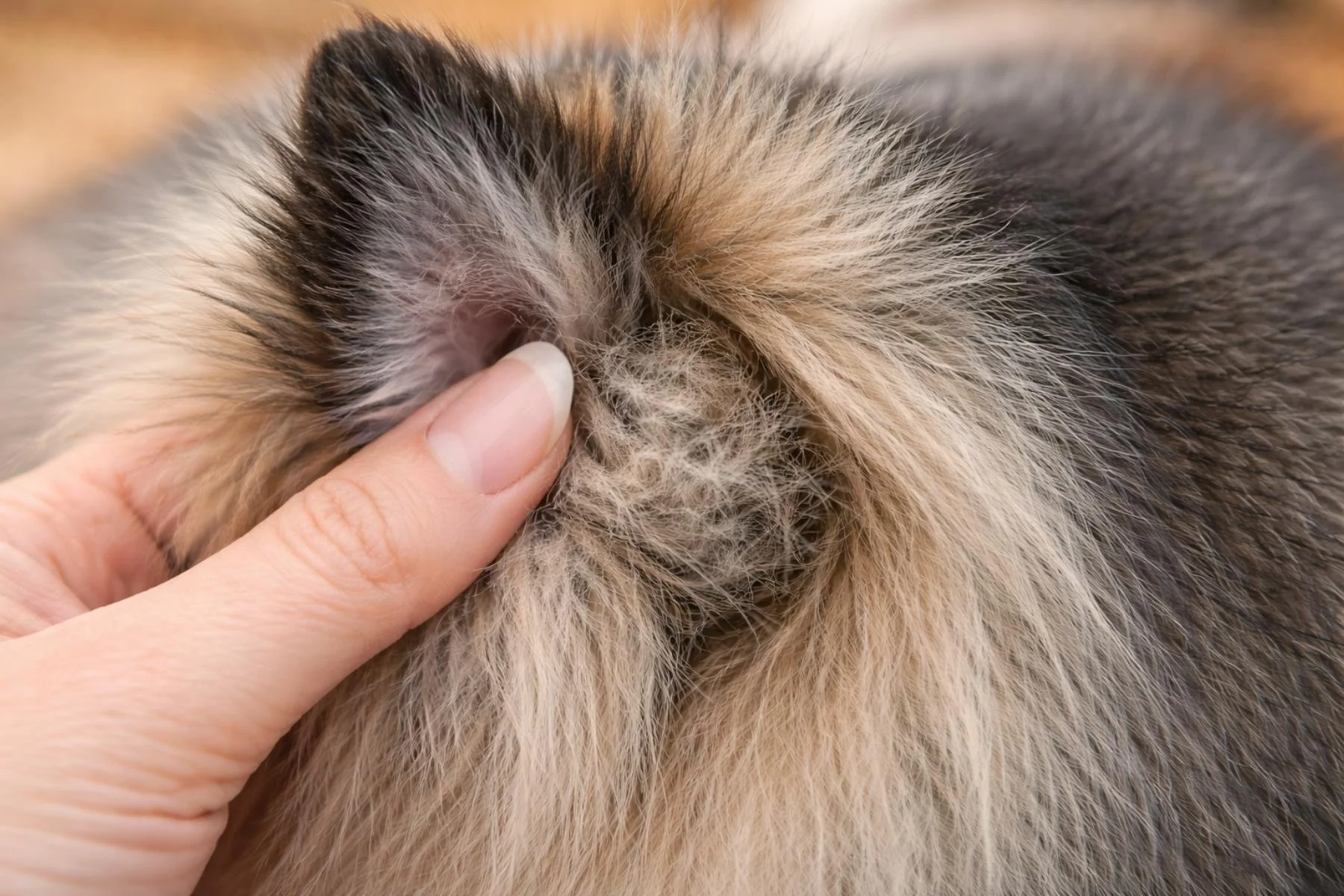
Detangling starts with slip, never dry brushing
Most Pomeranian mats can be worked out at home without shaving. Mist the mat with a conditioning spray, let it sit 1–2 minutes, then work it apart with your fingers from the outside in. Once loosened, brush in short strokes with a long-pin slicker and finish with a metal comb. If the comb passes through to skin without catching, you're done.
Shop Isle of Dogs Lush Coating Spray*If your Pomeranian has developed mats, shaving them is not your only option. And in many cases, it’s the worst one.
In our experience, most matting can be safely broken apart at home if you understand where the mat is, how tight it is, and what stage it’s in. The key is working with the double coat instead of against it.
Here’s how we detangle our Pomeranians’ mats without damaging the undercoat, thinning the topcoat, or creating long-term coat problems.
Why Pomeranian Mats Form So Quickly
Pomeranians are a double-coated breed. That means a dense, cotton-like undercoat with a longer, protective topcoat.
When the undercoat sheds and isn’t fully removed by line brushing, loose hair gets trapped beneath the topcoat. Add friction (harnesses, collars, movement behind ears), and those loose fibers twist together.
What starts as soft clumping becomes tight webbing, and that webbing turns into a mat.
Because the topcoat hides it, owners often don’t realize how tight the undercoat has become until it’s compacted against the skin.
This is why surface brushing doesn’t prevent mats.
Step 1: Assess the Mat
Not all mats are equal. Examine the mat and look for: Is it small and localized? Is it felted flat against the skin? Is it covering a large section?
If it’s flexible and you can separate it slightly with your fingers, you can usually work it out safely.
If the mat is rock-hard, wider than a quarter, or pulling skin tightly when lifted, then it’s a groomer case. They’ll likely have to shave it out rather than make your dog super uncomfortable trying to untangle it.
Don’t rush this step. The wrong approach causes more coat damage than the mat itself.
Step 2: Hydrate, Don’t Brush Dry
Never try to detangle a dry mat.
Dry brushing creates breakage and thins the topcoat, especially in a breed like a Pomeranian.
Instead:
Fully mist the mat with a conditioning spray.
Use your fingers to gently press product into the fibers.
Wait 1–2 minutes for slip to develop.
Look for sprays with lightweight conditioning agents, no heavy oils, and no silicone buildup.
We’ve consistently had good results with Isle of Dogs Lush Coating Spray because it softens without collapsing volume. The slip it creates makes mechanical separation possible without tearing the coat.
If you’re choosing one support product for detangling, this is the type that makes the biggest difference.
Step 3: Start With Your Fingers, Not a Brush
Do not reach for a brush immediately.
Start by:
Holding the base of the mat close to the skin (to prevent pulling)
Gently teasing small fibers outward from the edges
Working from outside in, not the center outward
Your goal is to reduce density gradually.
If you can break a large mat into 3–4 smaller sections, it becomes manageable.
This step takes patience. That patience protects coat integrity.
Step 4: Brush in Sections, Then Comb Through
Once the mat is loosened:
Use a long-pin slicker brush.
Brush in short, controlled strokes.
Line brush in small sections.
Always support the hair at the base.
A long pin slicker reaches through the topcoat into the undercoat without collapsing structure. Short pins tend to skim the surface and make matting worse over time.
After brushing, run a metal greyhound comb through the section. If the comb glides through to the skin without catching, you’re finished.
If it catches, there’s still density inside.
What to Avoid
Do not rip through mats with force or use a Furminator, scissors, or an aggressive dematting rake.
Don’t bathe before trying to remove mats, either. Bathing tightens existing mats. Water causes the fibers to contract and felt further.
How to Know It’s Working
You’ll see:
Coat regaining lift
Skin becoming visible in clean part lines
No pulling response from your dog
Comb passing cleanly to skin
You should not see short, broken guard hairs, patchy thinning, or pink irritated skin. If you see those signs, stop and reassess.
When to See a Professional
If:
Mats are tight against the skin
Your Pom reacts in pain
You see redness or moisture underneath
Large areas are fused together
A professional groomer should handle it.
Most reputable groomers will try spot dematting before shaving, but there is a threshold where shaving is the most humane option. Your groomer will be able to professionally assess the situation and provide a recommendation.
How to Prevent It From Happening Again
Detangling is reactive. Prevention is structural.
What actually prevents mats:
Line brushing 2–3x per week
Fully removing undercoat during coat transitions
Light mist before brushing
Checking friction zones (behind ears, armpits, base of tail)
A full breakdown of the tools that we use to maintain our Pomeranians’ coats can be found in our guide to The Only Grooming Tools That Actually Work for Pomeranians.
Frequently Asked Questions
-
A small, localized mat takes 5–10 minutes with the right tools and technique. Larger or tighter mats can take 20–30 minutes. If it's taking longer than that and your Pom is showing stress, stop and see a groomer.
-
A tangle is loose clumping you can pull apart with your fingers. A mat is compressed and has density and resistance. The test: if you can separate it easily with a finger, it's a tangle. If it has resistance and is flat against the skin, it's a mat.
-
No, bathe after detangling, not before. Water causes fibers to contract and felt tighter. Work out the mat completely, then bathe.
