
Blowing Coat Season: What Actually Happens & What to Do
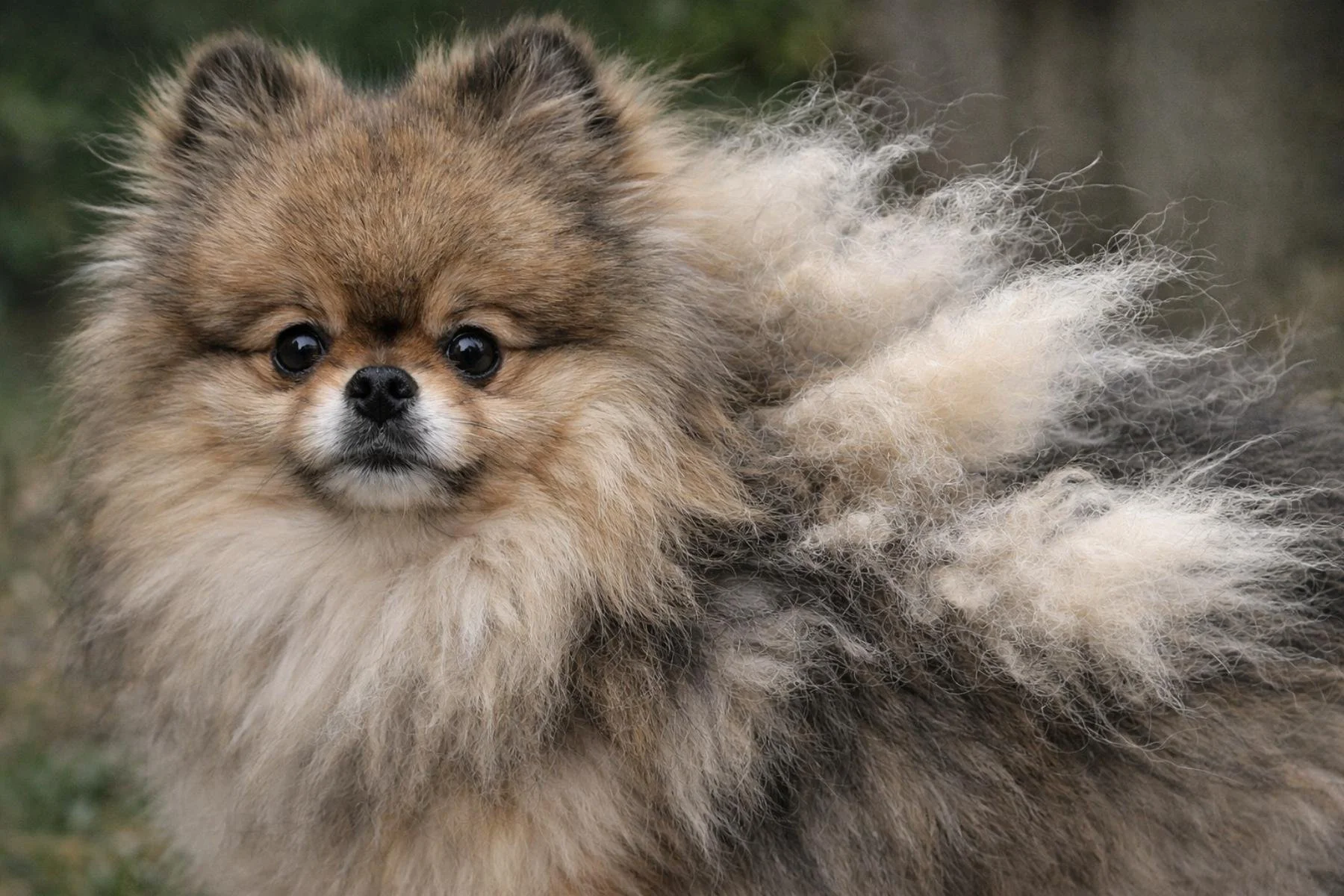
Loose undercoat sitting on top of the outer coat during blowing season. This is typical heavy seasonal shedding
Quick Answer
- Blowing coat is a normal seasonal shed where a Pomeranian's dense undercoat releases all at once, typically in spring and fall over a 2–6 week window
- To manage it correctly: brush every 2–3 days using a long-pin slicker brush and metal comb, add a bath followed immediately by a high-velocity blowout to accelerate undercoat release, and vacuum daily.
What “Blowing Coat” Actually Means for Pomeranians
When someone says a Pomeranian is “blowing coat,” they’re usually describing a sudden surge in shedding. It can feel like a dramatic and alarming change.
In reality, blowing coat is a normal coat cycle shift in a double-coated breed like a Pomeranian. The dense undercoat releases in large amounts over a short window, usually during seasonal transitions or hormonal changes.
In our experience, this phase looks intense, but it’s predictable. The key isn’t stopping it. The key is managing it correctly so the coat regrows evenly and the skin stays healthy.
If you understand what’s happening structurally, the process becomes manageable instead of stressful.
Why This Happens (And Why Pomeranians Shed Differently)
Pomeranians have a true double coat:
Guard hairs (longer, outer layer)
Undercoat (shorter, dense, insulating layer)
Blowing coat is primarily the undercoat releasing.
Here’s the mechanism:
Daylight shifts → hormonal signaling changes
Undercoat stops actively growing
Old undercoat loosens at the follicle
New coat begins pushing through
Because Pomeranians have an extremely dense undercoat compared to many other small breeds, the release looks dramatic. You’ll see:
Clumps when brushing
More hair on floors and furniture
A temporarily thinner or uneven look
What we’ve found consistently: if you remove the released undercoat properly, the regrowth is much more even and the coat retains volume long-term.
If you don’t? That’s when matting and compacted coat start forming near the skin.
Signs Your Pomeranian Is Blowing Coat
Blowing coat doesn’t always look the same.
Typical signs:
Increased shedding over 2–6 weeks
Coat feeling “cottony” or overly dense at the base
Areas that look patchy or flatter than usual
Loose undercoat pulling out easily with a comb
In puppies, blowing coat often refers to coat transition or “puppy uglies”: the loss of the soft puppy coat before the adult double coat fully develops.
In intact adults, hormonal cycles can also trigger heavier sheds.
If your Pom suddenly looks thinner but the skin is healthy and pink (not inflamed), you’re likely seeing a normal shed.
What To Do During Blowing Coat Season
1. Increase Line Brushing Frequency
During heavy shedding, brushing every 2–3 days is typically necessary.
Not surface brushing.
Proper line brushing:
Mist lightly with a conditioning spray
Work in small sections
Brush from skin outward
Follow with a metal comb to confirm nothing is left behind
This prevents released undercoat from compacting into friction mats.
If you’re choosing one tool that consistently makes the biggest difference, it’s a long-pin slicker brush designed for dense double coats. Look for:
Long, flexible pins
Cushion backing
No sharp, scratchy edges
That length is what actually reaches through the outer coat to remove released undercoat.
→ See our favorite long-pin slicker brush for our Pomeranians
2. Add a Controlled Bath + Blowout
A bath can dramatically accelerate undercoat release, but only if followed by a proper dry. (how often should you bathe Pomeranians?)
Warm water + quality shampoo helps loosen dead undercoat. A high-velocity dryer (used carefully) helps lift and separate it.
What actually makes the difference is airflow, not heat.
If you don't own a high-velocity dryer, even a strong hair dryer with directional airflow can help during this window. The dryer we use on Beignet is here →
The key: never let the coat air-dry dense during a shed. That’s how matting starts near the skin.
3. Keep the Skin Protected
When heavy undercoat drops, the skin can feel more exposed.
Use:
Light conditioning mist during brushing
Moderate humidity in your home
Clean bedding
Dry, irritated skin slows healthy regrowth.
What to Avoid During Blowing Coat
This is where most long-term coat damage happens.
Avoid:
Over-bathing.
Too many baths can dry the skin and weaken regrowth.Deshedding blades or harsh rakes.
Many tools marketed for “shedding” are too aggressive for a Pomeranian’s fine guard hairs.Shaving.
Shaving disrupts the double coat cycle and can permanently alter regrowth texture. If you’re concerned about thinning, shaving will not fix it.Doing nothing.
Letting released undercoat sit leads to compaction and friction mats, especially behind ears, armpits, and under collars.
How Often Does Blowing Coat Happen?
Most adult Pomeranians experience:
A heavier spring shed
A moderate fall shed
Some indoor dogs with controlled lighting shed more lightly but more consistently year-round.
Puppies go through a distinct coat transition around 4–8 months.
In our experience with multiple Poms across life stages, consistency matters more than intensity. Short, frequent grooming sessions during a shed outperform one long “fix it” session later.
How to Know It’s Going Well
You’re managing it correctly if:
The comb glides to the skin without snagging
The coat feels airy, not dense at the base
New growth looks even
Shedding slows gradually over weeks
If you see:
Bald patches
Inflamed or darkened skin
Coat not regrowing evenly months later
That’s when it’s time to consult a professional groomer or veterinarian to rule out underlying issues.
When to See a Professional
If the coat looks dramatically thin outside of seasonal timing, or regrowth stalls, don’t guess.
Hormonal imbalances, skin infections, or improper prior shaving can all mimic a heavy shed.
A professional evaluation prevents long-term coat damage.
Final Thoughts
Blowing coat season isn’t a crisis.
It’s a normal reset in a double-coated breed.
What actually makes the difference is:
Removing released undercoat correctly
Protecting the skin
Staying consistent
Preventative systems always outperform reactive fixes.
If you’re building your at-home routine between professional grooming visits, start with the right tools and structure. That’s what keeps the coat resilient year after year.
