
The Part of a Pomeranian’s Coat Most Brushes Never Touch
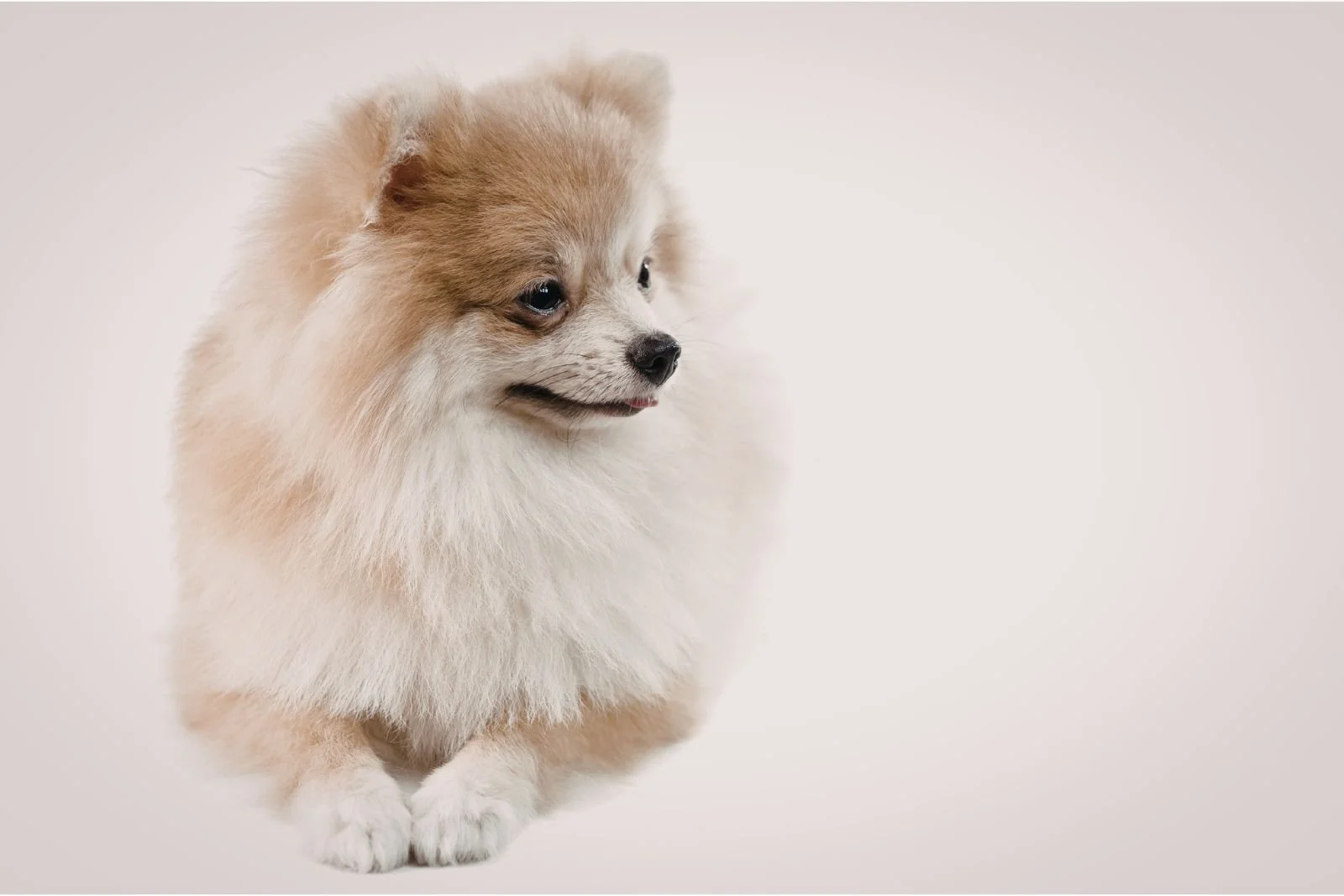
A Pomeranian's coat looks fluffy on the outside. That's not where problems start.
Beneath the top layer (the longer guard hairs that give Pomeranians their signature volume) is a dense, soft undercoat that sits close to the skin. This is the layer responsible for insulation, for most of the shedding, and for the mats that seem to appear out of nowhere between grooming appointments. It's also the layer that most brushes never actually reach.
What the undercoat is and why it matters
The double coat isn't just "more fur." The two layers have different textures, different functions, and different behaviors. The guard hairs on top are longer and structured, protecting the skin and giving the coat its shape. The undercoat underneath is shorter, denser, and cottony. It compacts easily. When it sheds, it doesn't fall away cleanly. It loosens from the follicle and sits trapped beneath the outer coat, tangling with healthy hair until something removes it.
That something is supposed to be the brush. But most brushes, including short slickers, pin brushes, anything with pins that flex or sit close together, only move through the guard hairs. They create surface fluff without disturbing the undercoat at all. The session feels productive. The coat looks better. But the compacted layer underneath stays exactly where it was.
This is why mats form on dogs that get brushed regularly. The brushing is real. The contact isn't.
What changes when the brush actually reaches the undercoat
The first thing I noticed when we switched to a brush with long enough pins to reach Beignet's undercoat was that he stopped struggling. With the cheap slicker and the pin brush, there was always resistance — him pulling away, repositioning, tolerating it rather than settling into it. I assumed that was just Beignet being Beignet.
It wasn't. The brush was dragging on the top layer instead of moving through it. Once the pins were long enough to pass through the guard hairs and grab the loose undercoat underneath, the resistance disappeared. The brush was doing what it was supposed to do, collecting what was ready to come out, instead of pulling on what wasn't.
The amount of fur that came out was also different. Not in a dramatic, alarming way, but noticeably more than before. That was the undercoat that had been sitting there.
Brushing sessions got shorter. The comb started passing through cleanly. And the mats that used to turn up at grooming appointments stopped being a regular occurrence.
What to look for in a brush
The pin length is what determines whether a brush can do this job. For a Pomeranian's double coat, you need pins long enough to pass through the outer layer and reach the base, not pins that sit at the surface and move the guard hairs around. They should be firm enough to part the coat rather than bend around it, but with enough give that they're not scraping the skin.
This is why the brush matters more than technique. Line brushing works because it's methodical and reaches the undercoat in sections. But line brushing with a short-pin brush doesn't change the fundamental problem: the pins still can't get where they need to go.
→ The brush we use to consistently reach the undercoat without irritation
