
How to Keep Your House Clean with Dogs (What Actually Works)
Some links in this post are affiliate links. If you purchase through them, I earn a commission at no extra cost to you. Everything recommended here is something we’ve personally used with Beignet and our Pom pack.
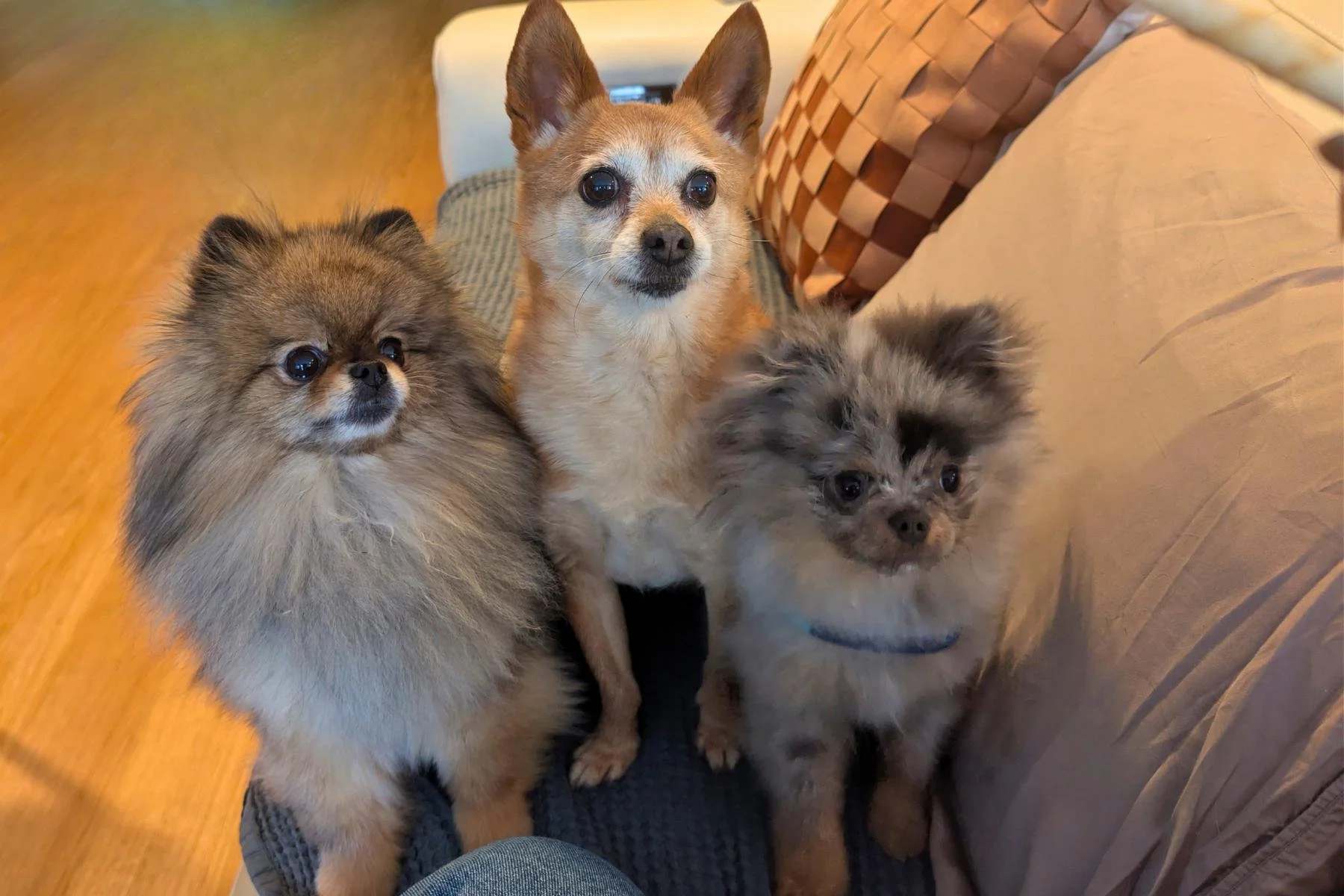
Quick answer: Keeping a clean house with dogs comes down to three things working together: a vacuum that runs often enough to stay ahead of the fur, a system for surfaces between vacuum sessions, and a grooming routine that reduces what sheds in the first place. None of these alone is enough. The fur wins when any one of them lapses.
There’s a version of living with dogs where the hair is always slightly winning. You vacuum, you sit back down, and 30 minutes later there’s a new drift collecting along the baseboard. You wash the couch throw. It needs washing again by Thursday. The floor looks clean and then the light changes and you can see the fine layer of fur on every surface.
We have three Pomeranians. Pomeranians have dense double coats that shed continuously and then, twice a year, dramatically. We’ve been in the losing version of this. We’ve also found the version that stays manageable, and the difference between them isn’t effort. It’s having the right tools running on the right cadence.
This is what the system actually looks like.
Why Dog Hair Accumulates Faster Than It Seems
Dogs with double coats (Pomeranians, huskies, golden retrievers, most northern breeds) shed in two distinct ways. There’s the continuous low-level shed that happens year-round, where individual hairs release from the outer coat and settle on floors, furniture, and clothing. And then there’s the seasonal undercoat release, blowing coat, where the dense inner layer loosens and releases all at once, dramatically increasing the volume for two to four weeks.
What makes dog hair specifically difficult in the house is its behavior on surfaces. Fine double-coat fur is light enough to stay airborne for extended periods, which means it settles everywhere — not just floors, but on top of picture frames, inside cabinet crevices, on the back of couch cushions you haven’t moved in a week. It also mats into upholstery fibers in a way that resists casual cleaning. You can run your hand across a couch cushion, see hair come away, run your hand again, and find more.
The system below addresses all of it, but it helps to understand what you’re actually dealing with before deciding how often to run each part.
The Vacuum: How Often Is Often Enough
Most dog owners vacuum too infrequently. Not because they’re negligent, but because the fur on the floor doesn’t look like much until it’s been accumulating for a while, and by then you’re behind. The goal isn’t to vacuum until it’s visibly dirty. The goal is to vacuum before it gets there.
For us, with three Pomeranians:
Regular season (most of the year): every other day on hard floors, once a week on rugs and upholstery
Blowing coat season (spring primarily, lighter in fall): every day on hard floors, twice a week on upholstery
This sounds like a lot. It’s not, with the right tool. We use the Dyson V12 Detect Slim — it’s cordless and light enough that a quick pass through the main living areas takes under ten minutes. The laser on the floor head is the feature that changed the cadence, because it reveals the fine fur layer on hard floors before it’s visible to the naked eye. Once you’ve seen what the laser reveals after 48 hours, you stop questioning the cadence.
Why we chose the Dyson V12 can be found here. If you’re using a heavy corded vacuum, the cadence above is less realistic. A lightweight cordless is what makes frequent vacuuming actually happen.
The upholstery problem
Hard floors shed fur visibly; upholstery holds it. The couch, the dog bed, rugs with pile, and any fabric surface the dog rests on will accumulate fur and coat oils faster than floors, and they require a different approach.
A vacuum like the Dyson V12 with an upholstery or motorized brush attachment is the most effective tool for couch surfaces. More effective than a lint roller for any significant accumulation. Lint rollers are useful for clothing and spot cleaning; they don’t address what’s worked into the fabric over days of a dog sitting in the same spot.
Washable couch covers are the practical long-term solution. Our couch has removable cushion covers that go in the wash once per month (probably should be more frequent, but we’re only human). It protects the actual upholstery from coat oil buildup and makes the surface cleanable in a way that furniture fabric isn’t.
Between Vacuums: Managing the Surfaces
Even with the vacuum running regularly, fur will accumulate inbetween sessions. For some people and households this is fine. For others, like if guests are coming, if someone in the house has allergies, if it’s blowing coat season, you need another layer of support:
An air purifier running continuously. This is the component most people underestimate. The fine fur that becomes airborne doesn’t settle back to the floor immediately. It circulates and resettles on every surface in the room. An air purifier with a HEPA filter captures airborne particles before they land. We run the Dyson PC1 continuously in the main living area. Learn more about our experience with it here — the difference is noticeable during blowing coat season when the airborne fur load spikes.
Reduce What Sheds: The Grooming Connection
The most sustainable version of a clean house with dogs is one where you’re also managing the source. Vacuuming and air purification address what’s already in the environment. Grooming reduces how much gets there in the first place.
For Pomeranians specifically, two practices make the biggest difference to in-home fur accumulation:
Regular brushing with the right tool. A slicker brush used correctly removes the loose undercoat before it releases on its own into the environment. Fur that comes out on the brush doesn’t end up on the floor. We brush two to three times per week during regular season and daily during blowing coat. How to do this without damaging the double coat is covered here.
Bathing and brushing out while damp. This is specific to double-coated breeds and it’s the step most people skip. A bath loosens the dead undercoat; brushing while the coat is still damp actually removes it. Without that post-bath brush-out, the loosened fur dries and releases over the following week on every surface in the house. With it, you capture the bulk of what would have shed in the next seven days in one session.
Blowing coat season requires a more active version of both — daily brushing, a bath to push the coat through faster, and generally accepting that the system will need to run harder for two to four weeks. Full details about blowing coat season can be found here.
The Room That Takes the Most Work
In our house, the main living area is where the pack spends most of their time, and it’s the room where the system matters most. The bedroom is close behind — Beignet sleeps at the foot of the bed, which means fine fur on bedding is a daily reality.
A few things that specifically help in the bedroom:
A dedicated dog blanket or throw on whatever surface they sleep on, washed weekly. This is the easiest single change. The dog sleeps on the blanket; the blanket goes in the wash; the actual bedding stays cleaner for longer.
The air purifier in the bedroom matters here too, especially for anyone in the house with allergies or sensitivities. Dander accumulates in soft surfaces and disturbs back into the air whenever you move on the bed. A running air purifier captures it before it becomes a problem.
What This Doesn’t Fix
Fur management and odor management are related but different problems. The system above handles the physical hair: the fur on surfaces, the fine particles in the air, the accumulation that makes a house look and feel like it has dogs in it.
The smell side (dander odor, coat oils on upholstery, accidents) requires a few additional steps. The air purifier addresses airborne odor particles, but surface smell and accident cleanup need their own approach.
The Realistic Version
A fully hair-free house isn’t the goal, and it isn’t achievable with dogs. The goal is a house where the hair isn’t winning — where surfaces are clean most of the time, where guests don’t sit down and stand up covered in fur, where the visual baseline stays somewhere you’re not quietly embarrassed by.
With three Pomeranians, we’re never fully ahead of it. But the system keeps us close enough that it doesn’t feel like a losing battle most days. The vacuum runs often. The air purifier runs continuously. The grooming reduces what gets into the environment in the first place.
That’s the whole thing. None of it is complicated. All of it requires consistency.
