
How to Reduce Pomeranian Shedding (Without Damaging the Double Coat)
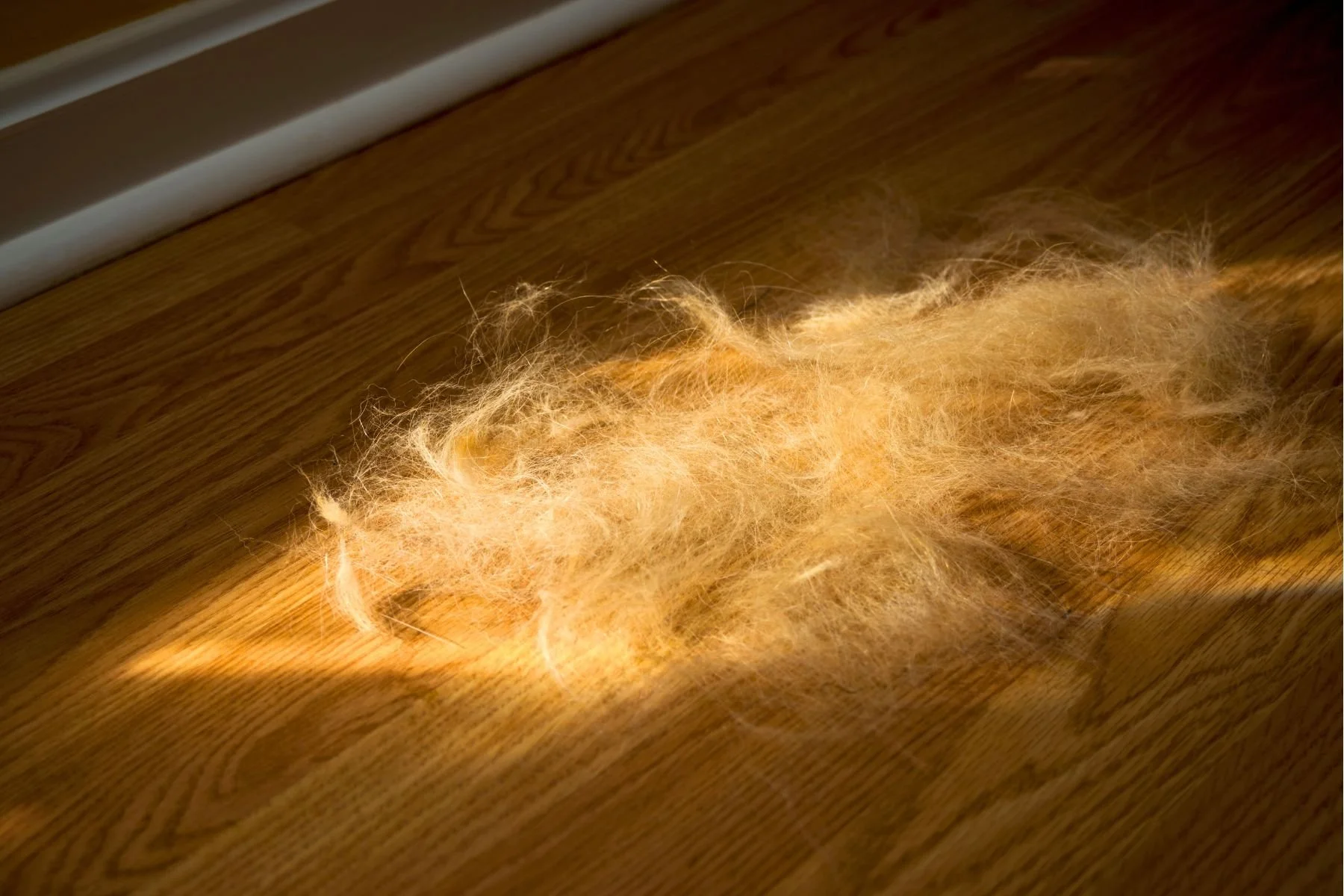
What seasonal undercoat release looks like in a double-coated Pomeranian
Quick Answer
- Pomeranians shed heavily from their undercoat, not their guard hairs (the fur you can see)
- Regular brushing with a long-pin slicker brush, using the line brushing method on a lightly misted coat, removes loose undercoat during grooming before it reaches your furniture
If you feel like your Pomeranian sheds more than a dog this small should possibly be capable of, you're not imagining it. Pomeranians have a dense double coat, and when that undercoat isn't brushed correctly, most of it ends up on your floor instead of in your brush. Here's how to fix that.
Do Pomeranians Shed a Lot?
Yes, but not in the way most people think.
Pomeranians shed from their undercoat, not the longer guard hairs you see on top. When the undercoat isn’t separated properly, it releases in clumps around your home instead of during grooming.
Seasonal coat blows (usually spring and fall) amplify this.
→ Unsure how often brushing should actually happen? The foundation matters more than frequency.
Why Your Pomeranian Might Be Shedding More Than Normal
Shedding increases when:
The undercoat isn’t being fully separated
Dry brushing causes breakage
Bathing is inconsistent
The coat is impacted (compact underlayer)
Diet or stress disrupts coat cycle
The easiest cause to address? Improper brushing technique.
Many owners brush the top layer only, which leaves the undercoat trapped.
→ See the technique and tools we use to maintain a Pomeranian coat
The 5-Step Method to Reduce Pomeranian Shedding at Home
1. Mist Before You Brush
Never brush a dry double coat.
A light conditioning spray reduces static, prevents breakage, and helps separate undercoat more effectively.
→ Learn more about why dry brushing can damage a coat
2. Use a Long-Pin Slicker Brush
Not all slicker brushes work for Pomeranians. Short, dense pins skim the surface.
You need long pins that reach the undercoat without scratching skin.
This single change reduces loose undercoat dramatically.
3. Line Brush (Section by Section)
Instead of brushing over the top, try line brushing:
Lift a small section
Brush from skin outward
Move upward in rows
This removes loose undercoat before it falls onto your floor.
4. Check With a Greyhound Comb
After brushing, run a stainless steel comb through.
If it snags, the undercoat isn’t fully separated.
Leaving compacted areas increases shedding later.
When to Talk to Your Vet about Shedding
Some excess shedding is normal:
Seasonal increase
Light daily undercoat release
Extra fur after bath + blow dry
But some causes of increased shedding signal a concern that you might need to raise with your veterinarian:
Bald patches
Dull coat
Itching or redness
Sudden dramatic fur loss
At that point, grooming adjustments are unlikely to fix it.
The Reality: You Can’t Eliminate Shedding
But you can:
Reduce loose undercoat dramatically
Shorten seasonal coat blow duration
Keep fur off furniture
Prevent matting that worsens shed cycles
When brushing is done correctly, most of the loose coat ends up in your brush, not your home.
That’s the goal.
The Tools That Make the Biggest Difference
If you want the short version:
Long-pin slicker
Stainless steel comb
Light conditioning mist
→ You can see the exact tools we use here.
These aren’t professional grooming secrets.
They’re small adjustments that make a difference over time.
