
How to Keep Your House from Smelling Like a Dog
Quick answer: Dog smell in a Pom household comes from three sources: dander in the air, fur and oils on surfaces, and accidents. An air purifier handles the invisible particles continuously; a vacuum handles floor-level fur and dander before it builds up; regular bathing and between-bath wipes manage the source. None of it eliminates the challenge entirely, but the system keeps it from becoming the first thing guests notice.
Some links in this post are affiliate links. If you purchase through them, I earn a commission at no extra cost to you. Everything recommended here is something we’ve personally used with Beignet and our Pom pack.
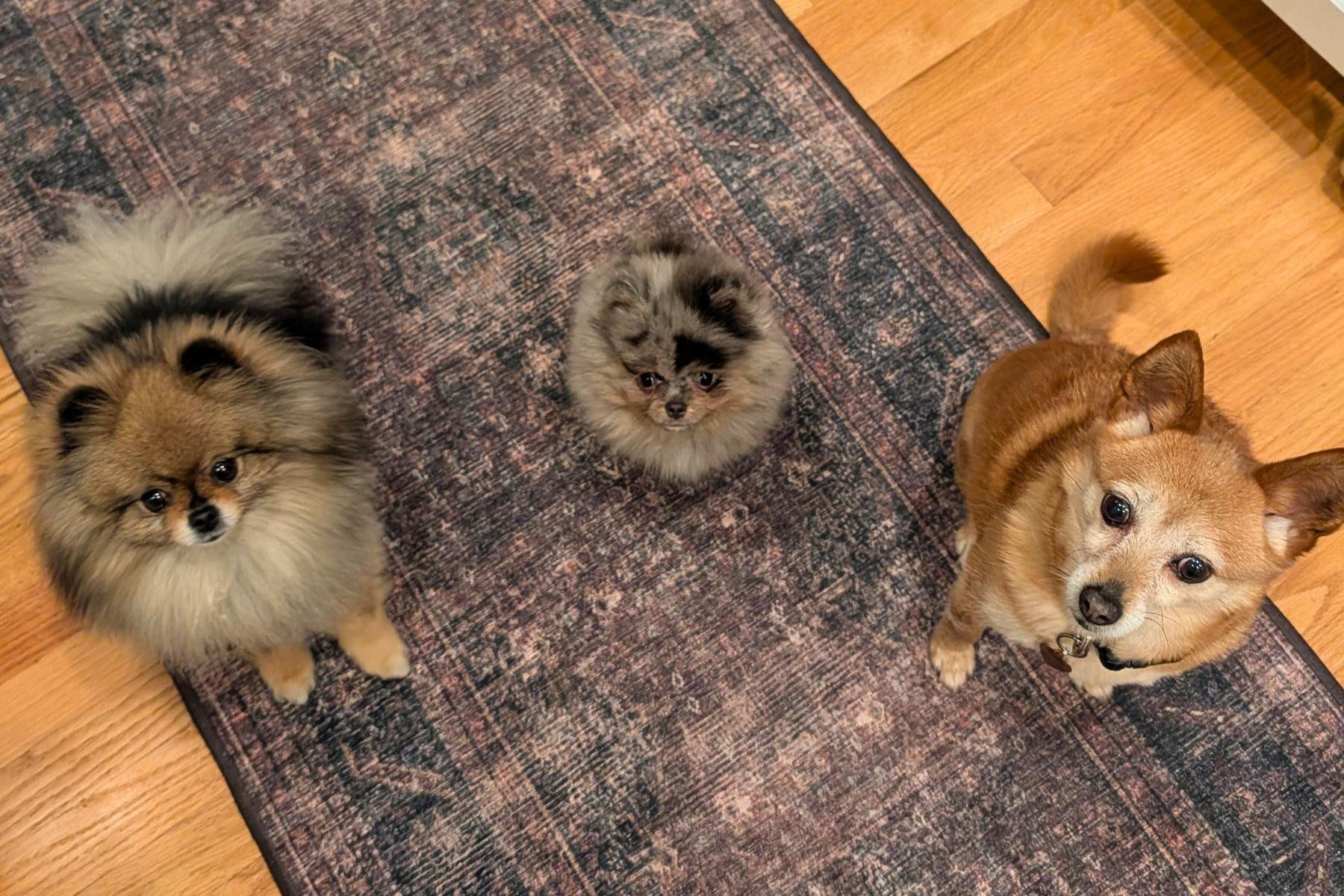
We came home from a two-week trip, relaxed, happy, carrying too much luggage, and the smell hit us before we’d even put our bags down. Our house. Three Pomeranians. We’d stopped noticing it entirely, and two weeks away reset that completely.
It wasn’t overwhelming. It wasn’t unpleasant exactly. But it was unmistakably dog, in a way we’d apparently normalized so gradually we didn’t know it was there.
That’s the honest starting point for this article: we have three Pomeranians, the house is an ongoing low-level challenge, and we manage it actively. Not perfectly. Actively. Here’s what the system actually looks like.
Where the Smell Actually Comes From
Dog smell in a home has a few distinct sources, and it’s worth separating them because they require different fixes.
The first is dander: microscopic flakes of skin that every dog sheds continuously, regardless of how clean or well-groomed they are. Dander is invisible and lightweight, which means it stays airborne for hours and settles into soft surfaces: upholstery, rugs, curtains, bedding. This is the component that causes allergic reactions in sensitive people and contributes to the background smell that you stop noticing because it’s always there.
The second is fur and coat oils. Pomeranians have dense double coats that produce natural oils to keep the guard hairs healthy. Those oils transfer to wherever your dog rests (the couch, the dog bed, your lap) and accumulate over time. Combined with shed fur that collects in corners and along baseboards, this is the layer that smells distinctly like dog when you press your face into a couch cushion.
The third is accidents. With a puppy in the house and Pomeranians being notoriously reluctant house trainers, accidents happen. Urine in particular has a way of persisting in ways that aren’t obvious until the room is warm or someone walks in from outside. Standard cleaners mask the smell temporarily; the odor returns. This one requires a specific fix.
Blowing coat season adds a fourth layer temporarily. When the undercoat releases (twice a year, heavily in spring) the volume of shed fur increases dramatically, and with it the dander load in the air. This is when the system needs to work hardest and when the difference between having an air purifier and not having one is most noticeable.
The Air: What You Can’t See Is the Problem
An air purifier handles the dander component, the part that’s invisible and airborne and settles into everything if left unaddressed. We run the Dyson PC1 in the main living area continuously. Not on a schedule, not only when it seems needed. Continuously, because dander doesn’t take breaks.
The practical difference is most noticeable when guests visit. Before the air purifier, we’d hear the occasional comment or notice people touching their eyes. After, nothing. Dander is one of the most common household allergens and it accumulates invisibly until someone sensitive walks in and notices what you’ve stopped seeing.
The other thing a running air purifier does is address the background smell that comes from airborne particles rather than surface buildup. It’s not a substitute for cleaning, but it handles the component that cleaning can’t reach.
Full details on why we chose this unit over others are in the air purifier article.
The Floor: What You Can See (and What You Can’t)
Fur on floors and surfaces is the visible part of the problem, but fur also carries the coat oils that contribute to smell. Vacuuming regularly is the floor-level half of the system.
We use the Dyson V12 Detect Slim, which has a laser that reveals fine particles on hard floors that are otherwise invisible. That feature alone changed how often we vacuum, because you can see exactly how much is accumulating even when the floor looks clean. It’s oddly satisfying to see the fur disappear under the laser light.
The cadence matters more than the tool. A vacuum that stays in the closet doesn’t help. During blowing coat season we vacuum every other day. The rest of the year, every few days. This sounds like a lot until you see what the laser reveals after 48 hours on a hard floor with three Poms.
Upholstered surfaces (couch, dog beds, rugs) need attention separately. Fur and oils accumulate in fabric faster than on hard floors and they’re harder to address. A vacuum with an upholstery attachment helps; washing washable covers regularly helps more.
The vacuum article covers why we landed on this specific model and what we’d look for in alternatives.
The Dog: Managing the Source
Air purifiers and vacuums manage what’s already in the environment. Grooming and bathing address the source: the dog itself.
Pomeranians don’t need frequent baths. Overbathing strips the coat oils that protect the double coat. But bathing on the right schedule makes a meaningful difference to ambient smell.
We bathe on a four-to-six week cycle for our adults using the Earth Rated double coat shampoo, which cleans, deodorizes, and, with a post-bath brush-out while the coat is still damp, removes the loose undercoat that would otherwise end up on the furniture over the following week. The bathing schedule that works for coat health and the one that works for smell management happen to be the same one.
Between baths, Earth Rated body wipes are the practical solution. After outdoor time, after meals, any time there’s the specific situation that Pomeranian coat creates after bathroom trips a quick wipe removes surface-level odor before it transfers to furniture. We keep them accessible rather than stored away, because the only wipes that work are the ones you actually reach for.
Bathing frequency, what to use, and how to dry properly without leaving moisture in the undercoat are all covered in the bathing article.
Accidents: The One That Requires a Specific Fix
Standard cleaners don’t work on urine smell. They address the visible stain and temporarily mask the odor, but they leave behind the organic compounds that cause the smell to return, especially noticeable when the room warms up or when someone comes in from outside with fresh air in their nose. The only thing that actually works is an enzyme-based cleaner that breaks down those compounds rather than covering them.
Nature’s Miracle is what we use. Apply, let it sit ten to fifteen minutes, blot, and don’t layer other cleaners on top of it. Other detergents can interfere with the enzymatic process.
With a puppy in the house this is a practical reality, not a failure of training. Pomeranians are notoriously slow to fully house train and even a trained Pom has the occasional off day. Having Nature’s Miracle accessible and using it correctly (not just wiping up and hoping, which we really wish would work) is what keeps accidents from compounding into a persistent background problem.
Blowing Coat Season: When the System Has to Work Hardest
Twice a year (heavily in spring, lighter in fall) a Pomeranian’s undercoat releases all at once. The volume of shed fur increases dramatically, and with it the dander load in the air and the coat oil transferred to surfaces. This is when the gap between having a system and not having one is most obvious.
Full details on what blowing coat actually looks like and what to do during it are in the blowing coat article. From a smell management perspective, the practical adjustments are: vacuum more often, run the air purifier on a higher setting, and do a bath with blowout to push the loose undercoat out before it disperses through the house on its own.
The Honest Answer
We came home from that trip, noticed the smell, and spent the next hour cleaning. That still happens after long absences, and probably always will. Three Pomeranians is three Pomeranians.
What the system does is keep the day-to-day baseline manageable. The kind of home where guests sit down without hesitation, where you’re not apologizing at the door, where the smell isn’t the first thing anyone notices. That’s the realistic goal. Not a dog-free smell, which isn’t achievable without removing the dogs. Just a home that happens to have dogs, rather than a dog home.
The air purifier runs continuously. The vacuum goes out every few days. The wipes live somewhere accessible. The enzyme cleaner is under the sink. None of it is complicated. All of it requires consistency.
