
Why You Shouldn’t Shave a Pomeranian (And What to Do Instead)
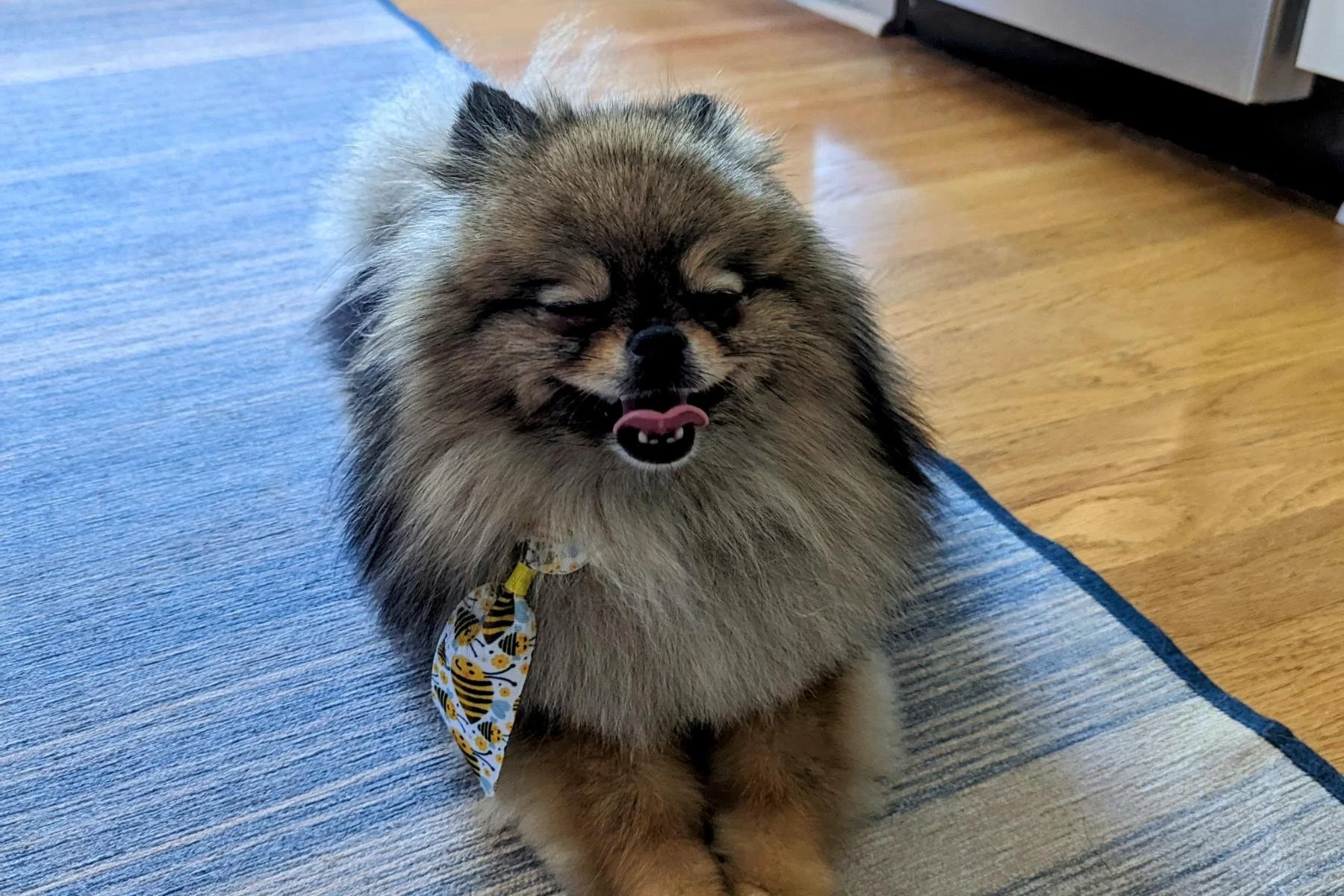
Quick answer: Shaving a Pomeranian doesn’t reduce shedding, doesn’t keep them cooler, and carries a real risk of permanent coat damage. The double coat is a temperature regulation system when they’re hot or cold. What actually helps during blowing coat season is a bath, a proper blowout, and a vacuum that can handle the volume. We’ve never shaved any of our Poms and hope never to have to.
Some links in this post are affiliate links. If you purchase through them, I earn a commission at no extra cost to you. Everything recommended here is something we’ve personally used with Beignet and our Pom pack.
The question comes up every spring. The coat is coming out in clumps, fur is on every surface, and someone (a well-meaning friend, a groomer, a stranger on the internet) suggests just shaving it all off. It seems logical. Less fur on the dog means less fur in the house. And surely a shaved Pom would be cooler in the summer.
Neither of those things is true. And the risk of shaving, a condition called post-clipping alopecia where the coat fails to grow back properly, is real enough that we’ve never considered it for any of our three Poms.
Here’s what’s actually happening with that coat, why shaving makes the problem worse rather than better, and what we do instead.
The Double Coat Has a Job
A Pomeranian’s double coat isn’t decorative. It’s a functional system descended from their spitz ancestors, dogs bred to work in cold climates. The two layers work together: a dense, soft undercoat that insulates, and longer guard hairs on top that repel moisture and protect the skin from sun and debris.
The part that surprises most people: the coat also keeps them cool. The undercoat traps air against the skin, creating a buffer between the dog’s body temperature and the outside heat. When you shave it off, you remove that buffer. A shaved Pom in summer is more exposed to heat, not less.
The coat also protects the skin from UV rays. Pomeranian skin, once exposed, can sunburn. This isn’t a minor inconvenience. Unprotected skin on a dog that spends time outdoors is a real health concern.
The Shedding Argument Doesn’t Hold Up
The main reason people shave is to reduce shedding. It doesn’t work. Shaving produces shorter hairs which are harder to see on furniture and clothing but still present in the same volume. And once the coat starts growing back unevenly, which it often does after shaving, you’re managing a patchy coat that sheds at different rates in different areas. The math doesn’t add up.
What actually reduces the volume of fur coming off the dog is removing the dead undercoat before it detaches on its own. That means a proper bath, a high-velocity blowout to push loose fur out of the coat, and brushing while the coat is still damp to pull it free. We do this during blowing coat season and the difference in what ends up on the furniture is significant.
The full process is in the blowing coat article. For the drying side: we use a high-velocity human hair dryer on low heat to avoid having yet another appliance in the house. For what ends up on the floor after: the Dyson V12 is what we run in the main living area.
Post-Clipping Alopecia Is Real, and Poms Are Specifically Vulnerable
Post-clipping alopecia is what happens when a shaved coat fails to grow back properly. The working theory is that shaving interrupts the hair cycle: follicles that were in a resting phase don’t get the signal to restart, and the coat either grows back slowly, unevenly, or, in some cases, not at all.
Pomeranians are specifically named as a high-risk breed. Their plush coat has a long resting phase between growth cycles, which means shaving is more likely to catch follicles at the wrong moment. The recovery window is typically quoted at three to twelve months for a healthy dog. And the older the dog, the slower the regrowth.
In the worst cases, the coat comes back with a different texture: softer, more cottony, prone to matting in ways the original coat wasn’t. The guard hairs grow back more slowly than the undercoat, leaving a dog that looks fluffy but lacks the structure that made the coat functional and mat-resistant. Groomers call this “coat funk.” It can be permanent.
There’s also a separate condition called Alopecia X — a hereditary hormonal condition that causes progressive hair loss in Poms regardless of grooming. Shaving can trigger or accelerate it in dogs that are predisposed. If your Pom’s coat is changing texture, thinning, or developing bald patches that aren’t related to grooming, that’s a conversation for your vet rather than a grooming decision.
The Groomer Situation
Some groomers will suggest a shave for a heavily matted dog or during blowing coat season as a practical shortcut. This is worth a direct conversation. Ask specifically about their approach to double-coated breeds and whether they’ve seen post-clipping alopecia in their experience. A groomer familiar with Pom coats will understand why you’re asking.
If the coat is severely matted to the point where a shave is being recommended for welfare reasons, ex: mats that are tight to the skin and causing pain or skin problems, that’s a different situation than a cosmetic shave for heat or convenience. The key distinction is whether shaving is medically necessary rather than a grooming preference. In those cases, the coat can often be managed with careful work rather than clipping, but a vet or certified groomer’s judgment matters more than a general rule.
What We Do Instead
Three Poms, never shaved — and we hope never to have to. Here’s the actual system:
During blowing coat season, we increase bath frequency and do a full blowout after each bath. The bath loosens dead undercoat; the dryer pushes it out of the coat before it detaches on its own. Brushing while the coat is still damp removes what’s been loosened. This is the moment where the volume of loose fur actually leaves the dog rather than depositing on the furniture over the following week.
Between baths, the Chris Christensen Big G Slicker Brush is what we use for daily maintenance. It reaches the undercoat rather than just moving the surface fur around. A metal comb follows to check for anything forming underneath. Both are covered in detail in the brush article.
For the house: the Dyson V12 handles floor fur during heavy shedding weeks, and the Dyson PC1 air purifier runs continuously for dander. Neither of those is a grooming tool, but during blowing coat season, they’re the things that keep the house feeling manageable while we let the coat do what it’s designed to do.
The thick double coat is not the problem. It’s a system that works when you work with it.
