
How Much Does It Cost to Groom a Pomeranian?
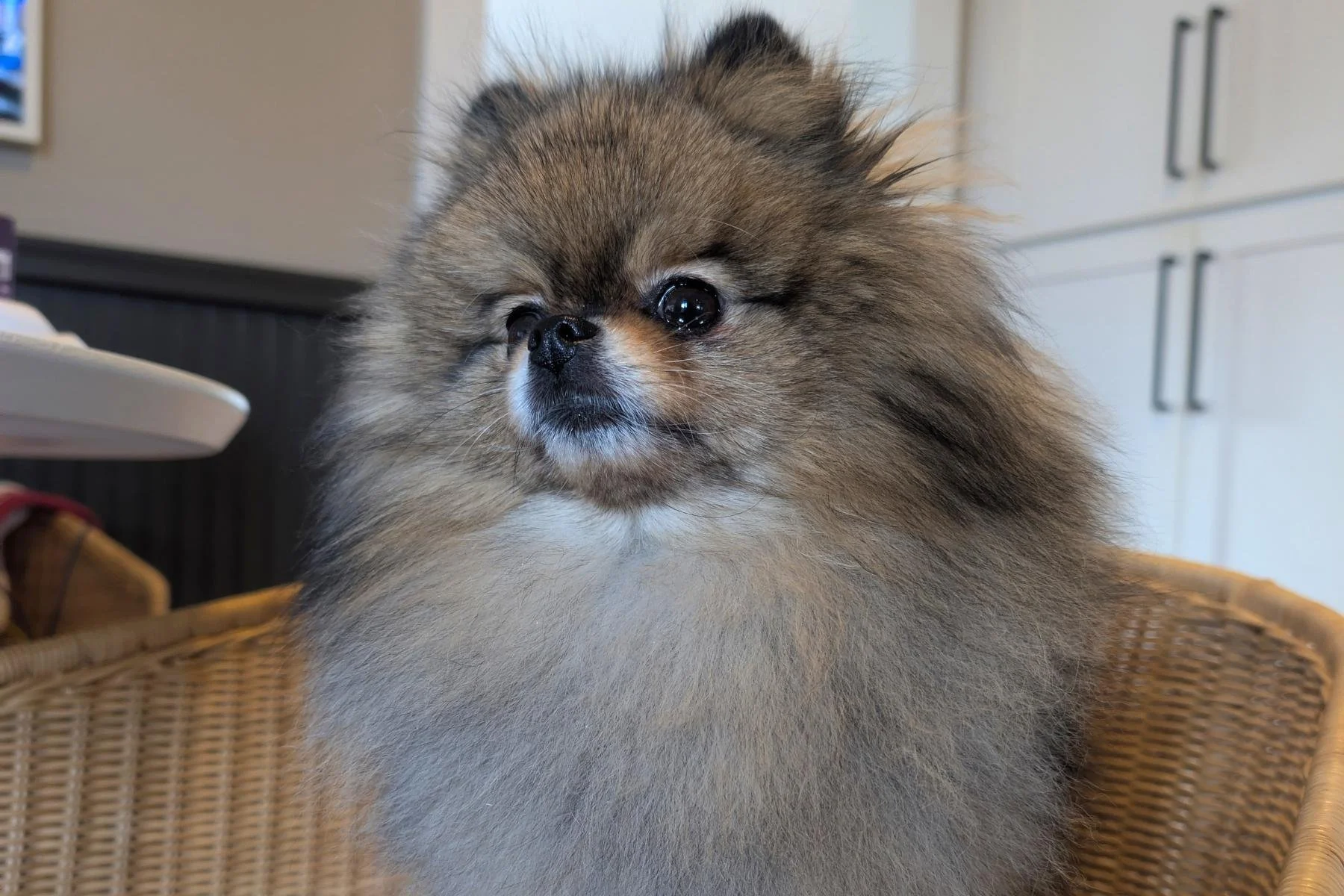
One of our Pomeranians, Beignet, post-groom
$75–$150+ per professional appointment, depending on your city and coat condition. We pay $125–$150 every six weeks in a high cost-of-living city.
We tried grooming ourselves, but the double coat requires skills that take years to develop. What is within your control is the maintenance between appointments — and that's what determines whether each groom is straightforward or a rescue operation.
When I searched “how much does it cost to groom a Pomeranian” before our first appointment with Beignet, I got a lot of unhelpful ranges. $40 to $100. Maybe more. It depends.
It does depend — but I can tell you what it actually depends on, what we pay, and how I think about the cost now that we’ve been doing this for years.
The short version: professional grooming for a Pomeranian is not optional if you want the coat to look right. What you do at home between appointments is the part that determines whether each visit is straightforward or a rescue operation.
What professional Pomeranian grooming actually costs
The honest range for a full Pomeranian groom is $75 to $150, with significant variation based on where you live, the condition of the coat, and whether you’re tipping (you should be).
We’re in a high cost-of-living city with high sales tax and high labor costs. We pay $125 to $150 all-in, tip included, every six weeks. That’s at the upper end nationally. In a lower cost-of-living area, the same quality of service might run $75 to $100.
What drives the cost up or down:
Location. Urban grooming prices in major metros are meaningfully higher than suburban or rural areas. A groom in Seattle or New York is going to cost more than the same service in a smaller city, full stop.
Coat condition. A mat-free coat that comes in clean takes less time to groom. A coat that hasn’t been brushed in weeks, or that has significant matting, takes longer — and some groomers charge accordingly. This is where your home maintenance directly affects your bill.
The groomer’s experience with the breed. A groomer who knows Pomeranian coats charges more because they’re worth more. The double coat requires specific knowledge and technique that not every groomer has. A lower price from a generalist groomer is not a deal if they don’t know what they’re doing.
Frequency. Some groomers offer a slight discount for regular clients on a consistent schedule. We’ve been with the same groomer for years. The relationship matters.
What a full groom usually includes
A standard full Pomeranian groom typically covers: bath and dry (which on a double coat is a significant undertaking), brush-out, trim and shaping, nail trimming, ear cleaning, and sometimes a spritz of finishing spray. What it doesn’t usually include is treatment for significant matting, which may be charged separately if the coat needs extra work to detangle.
Ask your groomer what’s included before the first appointment so there are no surprises.
Why we don’t groom at home
When Beignet was young and his adult coat was coming in, I bought the tools and watched hours of grooming videos. I was going to learn to do this myself.
I couldn’t get the shapes right. Everything took me three times as long as it looked like it should. The finished result was … fine, I suppose, but not what a professional Pomeranian groom looks like. And I was stressed, Beignet was over it, and I’d spent most of an afternoon on something that a skilled groomer does in under two hours.
I stopped after one and a half attempts. A trusted professional does a better job in less time, and Beignet is calmer for it.
The specific thing that’s hard about grooming a Pomeranian at home:
The shaping requires real skill. The round head, the lion ruff, the tail set, the leg feathering — getting these proportions right takes experience with scissors on a double coat that moves and floats differently than a straight coat. Watching it on video and doing it are not the same thing.
The drying is harder than it looks. A Pomeranian double coat needs to be completely dried to the skin to prevent hot spots and to let you see the actual coat structure you’re working with. That takes technique and time. An underdried coat is going to mat faster.
Mistakes are visible for weeks. Cut something unevenly or too short and you’re looking at it until the coat grows back. With a Pomeranian’s coat, that’s not a quick fix.
This is not to say home grooming is impossible — some people develop the skill and do it well. But for most Pom owners, professional grooming is the right answer, and the money is well spent.
What you should actually do at home
Here’s where the cost conversation gets more useful. The weeks between professional appointments are yours to manage, and how well you manage them directly affects the coat condition your dog arrives in, which affects how easy each groom is.
A dog that comes in well-brushed, mat-free, and recently bathed is easier and faster to groom than one that hasn’t been maintained. Some groomers factor this into how they schedule and price their time.
What we actually do between every six-week appointment:
Regular brushing with the right tools
Two to three times a week during normal periods, daily during blowing coat season. The key is reaching the undercoat, not just moving surface fur around. A pin brush or paddle brush sits on top of the coat. You need a slicker brush that makes actual contact with the undercoat, followed by a metal comb to check for anything forming underneath.
The full explanation of what to look for in a brush and how we use it is in the best brush for a Pomeranian double coat.
Checking for mats, especially before appointments
In the week before a grooming appointment, I do a more thorough coat check — a full line brush working section by section, paying attention to the areas that mat fastest: behind the ears, the armpits, the chest where the harness sits. If I find anything forming, I deal with it then rather than sending Beignet in with a tangle the groomer has to work around.
How to handle a mat when you find one is covered in how to detangle a matted Pomeranian. The short version: start with detangling spray, work from the tip of the mat toward the skin, and know when to leave it for the groomer.
Bathing between appointments when needed
We bathe Beignet roughly every three to four weeks, which means there’s usually one bath between professional appointments. A clean coat brushes more easily, mats more slowly, and arrives at the groomer in better condition.
The thing most people skip on a double coat: brushing while the coat is still damp after the bath. The bath loosens dead undercoat; the brush-out while damp is what actually removes it. Without that step, the loosened fur dries and deposits on your furniture over the following week instead of coming out on the brush.
Full bathing routine in how often to bathe a Pomeranian.
Leaving the shaping to the professional
I don’t touch Beignet’s coat with scissors between appointments. Not for trim-ups, not for stray hairs that are bothering me. The groomer sets the shape; my job is to maintain the coat condition until the next appointment.
At around five weeks, Beignet starts to look a bit scraggly — the coat is growing out from the last trim and the shaping isn’t as clean. That’s normal. The answer is the six-week appointment, not scissors at home.
How to find a groomer who knows Pomeranian coats
Not every groomer is equally equipped to work on a Pomeranian. The double coat and the specific shaping requirements of the breed are skills that some groomers have developed and others haven’t. A groomer who is excellent with doodles or labs may not be the right person for a Pom.
What to ask or look for:
Experience with double-coated breeds specifically. Ask directly. A groomer who knows Pomeranian coats will be able to talk about the undercoat, the shaping, and why shaving is something they won’t do. If they can’t have that conversation, keep looking.
The same person every time. We use a small, owner-operated salon where the same person grooms Beignet every visit. This matters. The groomer learns your dog’s coat, temperament, and what works. Rotating through different groomers at a large chain is a different experience.
Willingness to talk about your concerns. A good groomer will ask what you want, listen to your preferences, and tell you honestly if something isn’t going to work. If a groomer dismisses your questions or pushes back on the “don’t shave” conversation, find someone else.
A good groomer also solves problems you didn’t know had a solution. We wanted to keep Beignet’s back leg fur long to keep the classic Pom look. The problem was that he kept getting it dirty after bathroom trips, and we were constantly having to trim sections out ourselves (you can only do so many butt baths). We mentioned it to our groomer expecting a shrug. Instead she offered a different trim style: “pants” — shaped, fluffy, still distinctly Pomeranian, but cut in a way that stays clean. She also angles the belly trim so he doesn’t pee on himself when he goes. These are not things I would have known to ask for. They came from a groomer who was actually thinking about how the dog lives, not just executing a standard groom.
When you find someone good, hold onto them. Tip well. Be a consistent client. The relationship with a skilled groomer who knows your dog is genuinely one of the more valuable things you can invest in as a Pom owner.
The honest math on grooming costs
At $125–$150 every six weeks, annual professional grooming for Beignet runs approximately $1,000–$1,300. That’s a real line item.
The tools I use at home — the slicker brush, the metal comb, and conditioning spray — cost less than one grooming appointment. But while they are very helpful for day-to-day coat maintenance, they aren’t a replacement for professional grooming. They’re what makes professional grooming work better and last longer.
A dog that arrives at the groomer in good coat condition, mat-free and recently bathed, takes less time to work on. Over the years, maintaining the coat well between appointments has almost certainly made our grooming visits more straightforward. Whether that translates to a lower bill depends on the groomer, but the coat condition that results from consistent home maintenance is genuinely better.
The other framing: the cost of a professional groom is the cost of the result being right. The alternative — a groomer who doesn’t know what they’re doing, a mistake with clippers, a shave that damages the coat — costs more in the long run, and some of those costs are in coat recovery time that can’t be bought back.
The part that's actually within your control
You can't change what your city charges for grooming. You can change the condition your dog arrives in.
A coat that's been brushed regularly, checked for mats, and bathed on a reasonable schedule takes less time to groom and holds the cut longer between appointments. Over a year, that's the difference between six straightforward grooms and six rescue operations.
The three articles that cover the home maintenance side: the best brush for a Pomeranian double coat, how often to bathe a Pomeranian, and the full grooming routine we use between appointments. That's the system. The professional groom is what shapes it; the home routine is what protects the investment.
